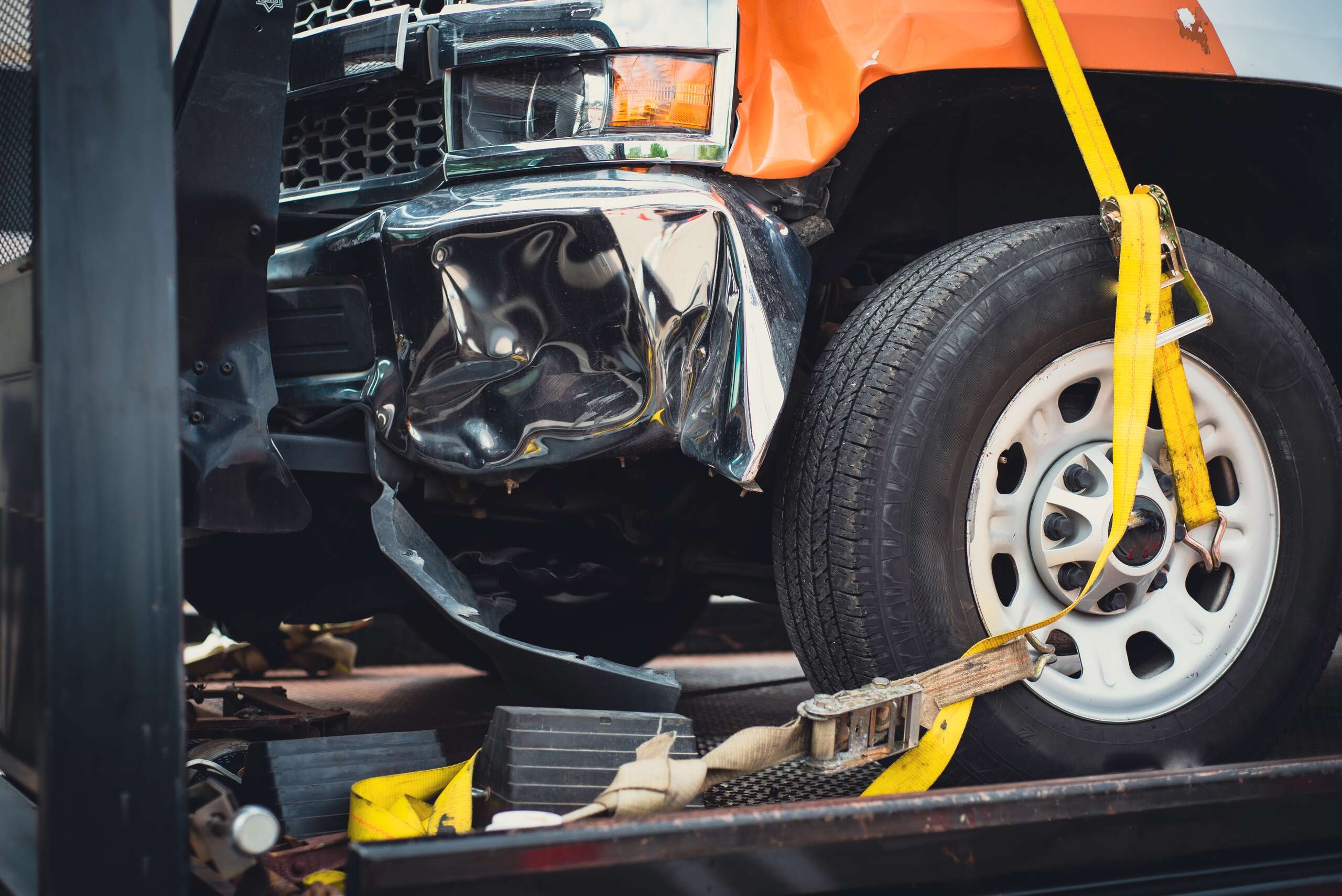
After a car accident in Philadelphia, get medical attention right away and report the crash to the police so an official record exists. Preserve the evidence with photos, witness names, and the police report number, and do not give the other driver’s insurance company a recorded statement. Call a Philadelphia car accident lawyer before you speak with any adjuster about fault or injuries.
You merge off the Vine Street Expressway onto I-76 westbound, a driver cuts across two lanes, and by the next morning the other driver’s adjuster is already asking for a recorded statement.
Philadelphia traffic is dense, adjusters are aggressive, and every billboard on the Schuylkill promises the same thing. What matters after a crash is how your insurance elections, your fault percentage, and the other driver’s coverage fit together under Pennsylvania law.
The Slocum Firm provides Philadelphia personal injury representation from our Scranton office, and our Philadelphia car accident lawyers handle claims from crashes on I-95, Broad Street, Roosevelt Boulevard, and every road in between.
Call (570) 209-7376 to reach The Slocum Firm, 24 hours a day. No fees unless we win.

Car Crashes on Philadelphia’s Busiest Roads
Most serious Philadelphia car accident claims come from a handful of corridors, and each one produces its own crash pattern. The road where you crashed often shapes the evidence and the insurance that follows.
- I-76 (Schuylkill Expressway): Short merges and left-side exits near the Vine Street Expressway interchange lead to sideswipes and rear-end chains.
- I-95: Heavy commuter and freight traffic produces high-speed rear-end and lane-change crashes, including crashes involving tractor-trailers that raise separate federal safety issues.
- Broad Street: Frequent signals, left turns, and pedestrian crossings create T-bone and turning collisions. In 2024, Broad Street recorded more traffic deaths than any other street in Philadelphia.
- Vine Street Expressway (I-676): Stop-and-go traffic through Center City leads to rear-end crashes that adjusters often undervalue.
Roosevelt Boulevard
Before 2020, the City of Philadelphia identified Roosevelt Boulevard as the most dangerous road in the city. Speed cameras installed that year cut speeding and pedestrian crashes, but the Boulevard still produces a steady share of severe-injury claims.
The road runs 12 lanes wide through Northeast Philadelphia neighborhoods, with separate inner and outer roadways and crossovers between them. That layout creates turning conflicts, high-speed rear-end crashes at signals, and long crossings for pedestrians struck on Philadelphia arterial roads.
Commercial Truck and Delivery Vehicle Crashes on I-95
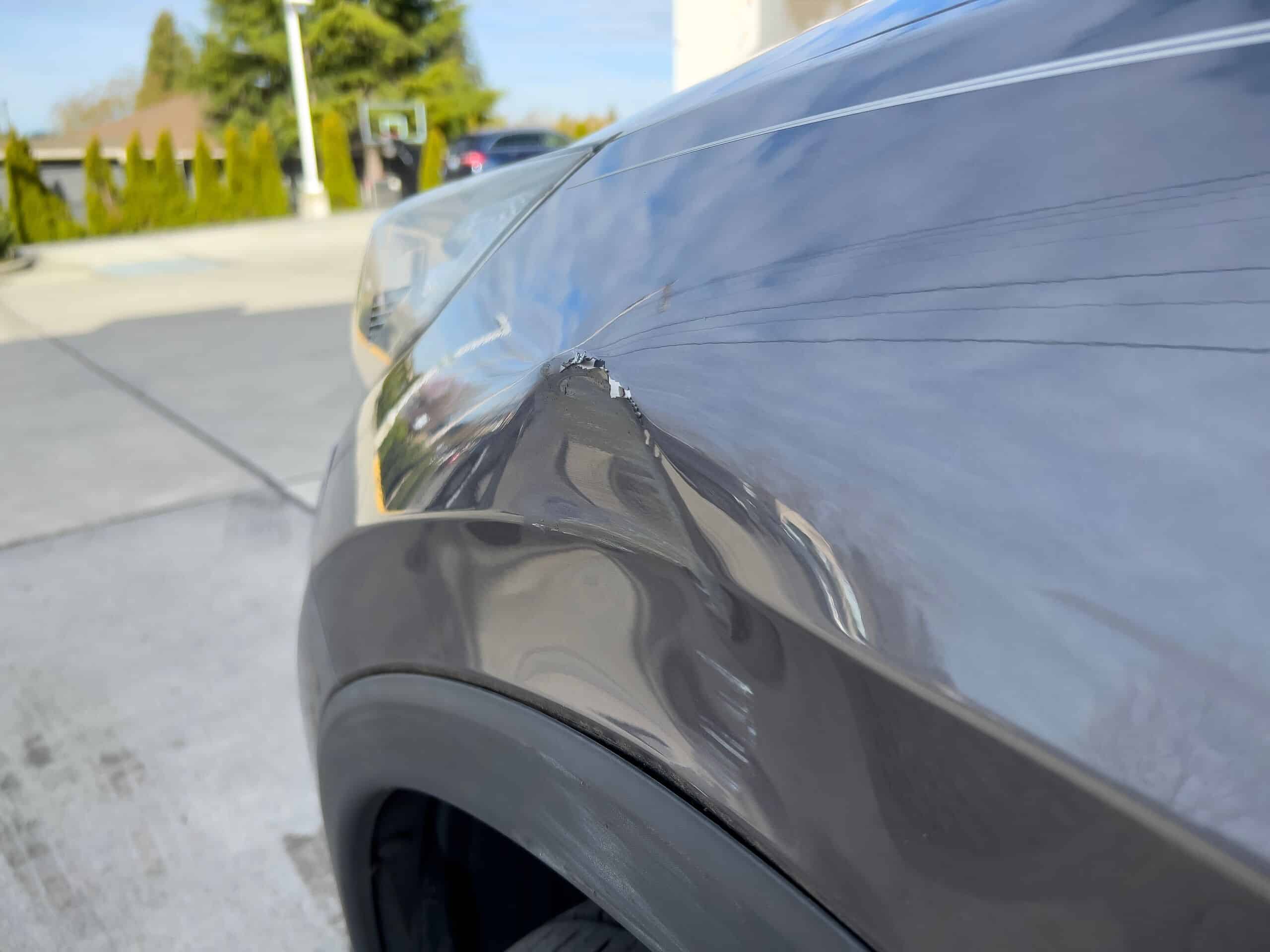
I-95 through Philadelphia carries port freight, long-haul tractor-trailers, and a steady stream of delivery vans and box trucks. A crash with any of them changes the claim, because a business, its insurer, and often federal safety rules stand behind the driver.
Why I-95 Produces So Many Commercial Vehicle Crashes
Three conditions overlap on I-95 in Philadelphia. Container trucks enter and leave the highway near the Packer Avenue and Tioga marine terminals, commuter traffic peaks around Center City, and years of reconstruction have left lane shifts, narrow shoulders, and sudden merges.
Work zones add risk for every driver. Pennsylvania uses automated speed cameras in active highway work zones under 75 Pa.C.S. § 3369, but a loaded truck that misjudges a lane shift still needs far more room to stop than a car.
The most common results are rear-end crashes in slowing traffic, sideswipes during lane changes, and underride crashes, where a smaller vehicle slides beneath a trailer.
Delivery Vans and Box Trucks on City Streets
Last-mile delivery vehicles now cover nearly every Philadelphia neighborhood, double-parking on narrow blocks and making frequent stops and turns. Their drivers often work for a contractor hired by a large retailer rather than the retailer itself.
That structure affects who pays. The company that employs the driver usually answers for a crash its driver causes on the job, and its commercial auto policy typically carries far higher limits than a personal policy.
What Changes in a Commercial Vehicle Claim
For-hire interstate carriers hauling general freight must carry at least $750,000 in liability coverage under 49 C.F.R. § 387.9. Many trucks and some larger delivery vehicles also fall under federal safety rules on driver hours, qualifications, and maintenance.
Those rules create records, including driver logs, inspection reports, and engine data, that show what happened in the minutes before the crash. Some of those records may be overwritten or discarded within months, so commercial vehicle claims call for faster evidence preservation than a typical car crash.
How Does Pennsylvania’s Choice No-Fault System Affect Your Claim?
Pennsylvania lets every driver choose between full tort and limited tort, and that choice decides whether you recover pain and suffering damages after a crash. Your own policy also pays your first medical bills regardless of fault, which is the no-fault part of the system.
Full Tort vs. Limited Tort: What Each Costs You
The election under 75 Pa.C.S. § 1705 trades premium savings for legal rights:
| Election | What You Pay | What You Keep After a Crash |
|---|---|---|
| Full tort | A higher premium | The right to recover pain and suffering for any injury someone else caused |
| Limited tort | A lower premium | Medical bills and lost wages, but pain and suffering only for a serious injury or a listed exception |
The exceptions matter in Philadelphia. Limited tort does not bar a pain and suffering claim when the at-fault driver was convicted of DUI, carried no insurance, or drove a vehicle registered in another state. It also does not apply when you were injured riding in a vehicle other than a private passenger car, such as a SEPTA bus or a taxi.
The Serious Injury Exception
A limited tort insured still recovers pain and suffering for a serious injury, which 75 Pa.C.S. § 1702 defines as death, serious impairment of a body function, or permanent serious disfigurement.
The impairment does not have to be permanent. Courts look at which body function was affected, how long the impairment lasted, and how much it changed your daily life, and in most cases a jury rather than a judge decides whether an injury qualifies.
First-Party Benefits: The Medical Coverage That Pays Regardless of Fault
First-party benefits, often called PIP, pay your medical bills from your own auto policy no matter who caused the crash. Pennsylvania’s minimum is just $5,000 under 75 Pa.C.S. § 1711, and serious injuries exhaust that amount quickly.
A hypothetical example, for illustration only. An emergency room visit, a CT scan, and two follow-up appointments after a Broad Street crash use up most of a $5,000 limit within the first few weeks.
Three rules shape what happens next:
- Higher limits are optional. Under 75 Pa.C.S. § 1712, you may have bought extra medical, income loss, or funeral benefits. Your declarations page shows what you carry.
- Providers bill at reduced rates. Pennsylvania’s cost containment rules under 75 Pa.C.S. § 1797 cap what doctors charge the auto insurer and bar them from billing you the difference.
- Health insurance picks up next. Once PIP runs out, your health insurer generally pays, and under 75 Pa.C.S. § 1720, most of those payers have no right to repayment from your injury settlement. Some self-funded employer plans are an exception.
How Does Fault Change What You Recover?
Under 42 Pa.C.S. § 7102, you recover damages only if your share of fault is 50% or less. Your award drops by your percentage of fault, and at 51% you recover nothing.
A hypothetical example, for illustration only. Another driver runs a yellow light on Broad Street and hits you as you turn left, and a jury values your injuries at $120,000.
| Your Share of Fault | What You Recover |
|---|---|
| 0% | $120,000 |
| 30% | $84,000 |
| 50% | $60,000 |
| 51% | $0 |
The jump from 50% to 51% is where adjusters focus. They argue you turned too early, misjudged the gap, or looked at your phone, because one percentage point erases the entire claim.
UM/UIM Coverage and Stacking in Philadelphia Car Accident Claims
When the driver who hit you carries no insurance, or not enough, your own uninsured and underinsured motorist coverage (UM/UIM) often becomes the main source of recovery. Hit-and-run crashes, which are common on Philadelphia’s crowded streets, also run through UM coverage.
Under 75 Pa.C.S. § 1731, insurers must offer UM/UIM coverage, and you only lose it by rejecting it in writing on a statutory form. Pennsylvania’s minimum liability limit is just $15,000 per person, so UIM matters in almost every serious crash.
Stacking often multiplies that coverage. Under 75 Pa.C.S. § 1738, your UM/UIM limits stack across the vehicles on your policy unless you signed a stacking waiver. Three cars with $15,000 in UIM each may provide $45,000 instead of $15,000.
How a Philadelphia Hit-and-Run Claim Works
When the driver who hit you flees and is never identified, the claim usually runs through your own uninsured motorist (UM) coverage. Pennsylvania treats an unidentified hit-and-run vehicle as uninsured, so your insurer takes the place of the missing driver’s insurance.
Leaving the scene of a crash that injures someone is a crime under 75 Pa.C.S. § 3742. The criminal case and your insurance claim proceed separately, and your claim does not depend on police finding the driver.
A Philadelphia hit-and-run claim usually moves through these stages:
- Reporting the crash. A prompt police report matters, and UM policies commonly require notice to both the police and your insurer within a short window.
- Searching for the driver. Business security cameras, doorbell video, SEPTA vehicle cameras, witnesses, and paint or debris left at the scene sometimes identify the vehicle. If the driver is found, the claim shifts to their insurance.
- First-party benefits. Your own PIP coverage pays early medical bills regardless of fault, as with any Pennsylvania crash.
- The UM claim. You still have to prove the other driver’s negligence, but now to your own insurer, which evaluates the claim much as the at-fault driver’s insurer would have. Stacked UM limits may raise the coverage available.
- Resolution. Many Pennsylvania auto policies send disputed UM claims to arbitration rather than a jury trial, so the policy language shapes how the claim ends.
People with no auto policy of their own, and no household policy that covers them, are not left without options. Pennsylvania’s Assigned Claims Plan under 75 Pa.C.S. § 1752 provides limited benefits to eligible crash victims who have no other coverage.
Hit-and-run crashes are common on Philadelphia’s crowded streets, and the evidence that might identify the driver fades fastest. Video from nearby businesses is often overwritten within days, which makes the first week the most productive time to search.
What Should You Do in the First 72 Hours After a Crash?
The first three days after a Philadelphia car accident decide much of what the claim is worth later. Medical records, the police report, and scene evidence all start disappearing or hardening into the insurer’s version of events.
- Get medical care right away. A gap between the crash and your first treatment gives the adjuster an argument that something else caused your injuries.
- Request the police report. Philadelphia Police Department reports are available through the City’s public safety reports portal. Pennsylvania State Police handle most crashes on I-76 and I-95.
- Photograph everything. Capture vehicle positions, damage, traffic signals, skid marks, and your injuries on each of the following days.
- Collect witness details. Get names and phone numbers, and note nearby businesses whose security cameras might have caught the crash before the footage records over.
- Notify your own insurer, but hold off on recorded statements. Your policy requires prompt notice. You have no obligation to give the other driver’s insurer a recorded statement, and anything you say becomes part of its fault argument.
Filing Deadlines, Including the Six-Month City and SEPTA Notice
Pennsylvania gives you two years from the crash to file a personal injury lawsuit under 42 Pa.C.S. § 5524. Claims against a government entity carry an earlier deadline.
If a SEPTA bus, a City of Philadelphia vehicle, or another government vehicle caused your crash, 42 Pa.C.S. § 5522 requires written notice within six months. Pennsylvania also caps damages in these claims: generally $250,000 per person for Commonwealth agencies such as SEPTA under § 8528, and $500,000 per incident for local agencies such as the City under § 8553.

Crashes With SEPTA Buses and Trolleys
SEPTA buses and trolleys share Philadelphia’s streets with every other vehicle, and they are involved in crashes with passengers, drivers, cyclists, and pedestrians. These claims follow special rules because SEPTA is treated as a Commonwealth agency with limited immunity.
Who Brings SEPTA Claims
SEPTA crash claims usually come from one of four groups:
- Passengers hurt in a collision or by an abrupt stop
- Drivers of cars struck by a bus or trolley
- Pedestrians hit while crossing near a stop or at an intersection
- Cyclists struck by a turning bus or caught in trolley tracks along routes such as Girard Avenue and in West and Southwest Philadelphia
Special Rules for Bus and Trolley Passengers
A passenger injured on a SEPTA vehicle keeps full tort rights even with a limited tort policy, because a bus or trolley is not a private passenger vehicle under 75 Pa.C.S. § 1705. That exception often makes pain and suffering damages available when limited tort otherwise bars them.
Medical bills follow Pennsylvania’s priority rules under 75 Pa.C.S. § 1713. A passenger’s own auto policy, or a household relative’s, pays first, and a passenger with neither turns to the coverage on the vehicle they were riding.
Pennsylvania holds public transit carriers to a high standard of care for passengers. Courts still require more than an ordinary stop, though: injuries from a normal jolt of city driving usually do not support a claim, while an unusually sudden or violent stop may.
Evidence in a SEPTA Case
Most SEPTA buses and trolleys carry onboard cameras, and SEPTA keeps operator reports, maintenance records, and dispatch logs for its vehicles. That footage often shows exactly how a crash or sudden stop happened.
Like any video, it may be recorded over if no one asks for it. A preservation request sent early, alongside the six-month written notice described above, protects the evidence while the claim takes shape.
Passengers and witnesses on the bus are also valuable. Their names are easiest to collect in the first minutes after a crash, before everyone disperses to other routes.
Compensation Available After a Philadelphia Car Accident
Car accident victims in Pennsylvania may recover economic losses, non-economic losses where their tort election allows, and punitive damages in cases of reckless conduct. Drunk driving crashes are the most common source of punitive damage claims.
Recoverable damages typically include:
- Medical bills beyond what PIP covered, including future treatment
- Lost wages and reduced earning capacity
- Pain and suffering, emotional distress, and loss of enjoyment of life
- Vehicle repair or replacement
- Punitive damages for reckless conduct such as drunk driving
Punitive damages punish conduct that shows reckless indifference to others’ safety, and a driver who got behind the wheel drunk often meets that standard. A DUI conviction also lifts the limited tort restriction, so drunk driving crash claims often carry the full range of damages.

Where Philadelphia Car Accident Cases Are Filed
Car accident lawsuits from crashes in the city are generally filed in the Philadelphia County Court of Common Pleas. The size of the claim decides which track the case follows.
Claims valued at $50,000 or less go to compulsory arbitration before a panel of three attorneys, and either side may appeal for a new trial. Larger claims proceed in the court’s major jury program. Many car accident claims sit near that $50,000 line, so valuing the claim accurately from the start shapes where it lands.
No Fees Unless We Win
The Slocum Firm handles Philadelphia car accident cases on a contingency fee basis, and consultations are free. No fees unless we win.
We have represented injured Pennsylvanians since 2009, and Philadelphia drivers reach us the same way Scranton clients do. When you call, you get:
- Availability by phone, 24 hours a day
- More than 50 years of combined legal experience
- A recovery rate above 95%
- Hablamos español
Results vary by case, and prior outcomes do not guarantee a similar result.

FAQs: Philadelphia Car Accident Lawyer
How long do I have to file a car accident claim in Philadelphia?
You generally have two years from the date of the crash, not the date you finish treatment. The clock keeps running while PIP pays your bills and while you negotiate with the insurer.
Claims against SEPTA or the City require written notice within six months, so a government vehicle shortens the timeline sharply.
What is the difference between full tort and limited tort in Pennsylvania?
Full tort keeps your right to recover pain and suffering for any injury someone else causes. Limited tort costs less but restricts pain and suffering to serious injuries and a short list of exceptions.
You may change your election at renewal, but a change made after a crash does not apply to that crash.
Do I still have a claim if the crash was partly my fault?
Yes, as long as your share of fault is 50% or less. Your recovery drops by your percentage of fault.
Fault percentages usually take shape long before trial, built from the police report, photos, and anything you told an adjuster. That is why early evidence and careful statements matter.
What if I was hit by a SEPTA bus or a city vehicle?
You may still recover damages. Pennsylvania’s immunity law includes a vehicle liability exception for crashes caused by the negligent operation of a government vehicle.
Written notice must reach the agency within six months. For SEPTA, which Pennsylvania treats as a Commonwealth agency, notice also goes to the Office of Attorney General. Damage caps apply to these claims.
How much does it cost to hire a Philadelphia car accident lawyer?
No fees unless we win, and consultations are free. Under a contingency fee, the attorney fee comes from the recovery rather than from your pocket up front.
Your fee agreement explains how case costs are handled, so ask us to walk through it at your consultation.
Talk to Us Before You Give a Recorded Statement
If you were injured in a car accident anywhere in Philadelphia, talk to us before you give the other driver’s insurance company a recorded statement.
Call The Slocum Firm at (570) 209-7376. We’re available 24/7. No fees unless we win.