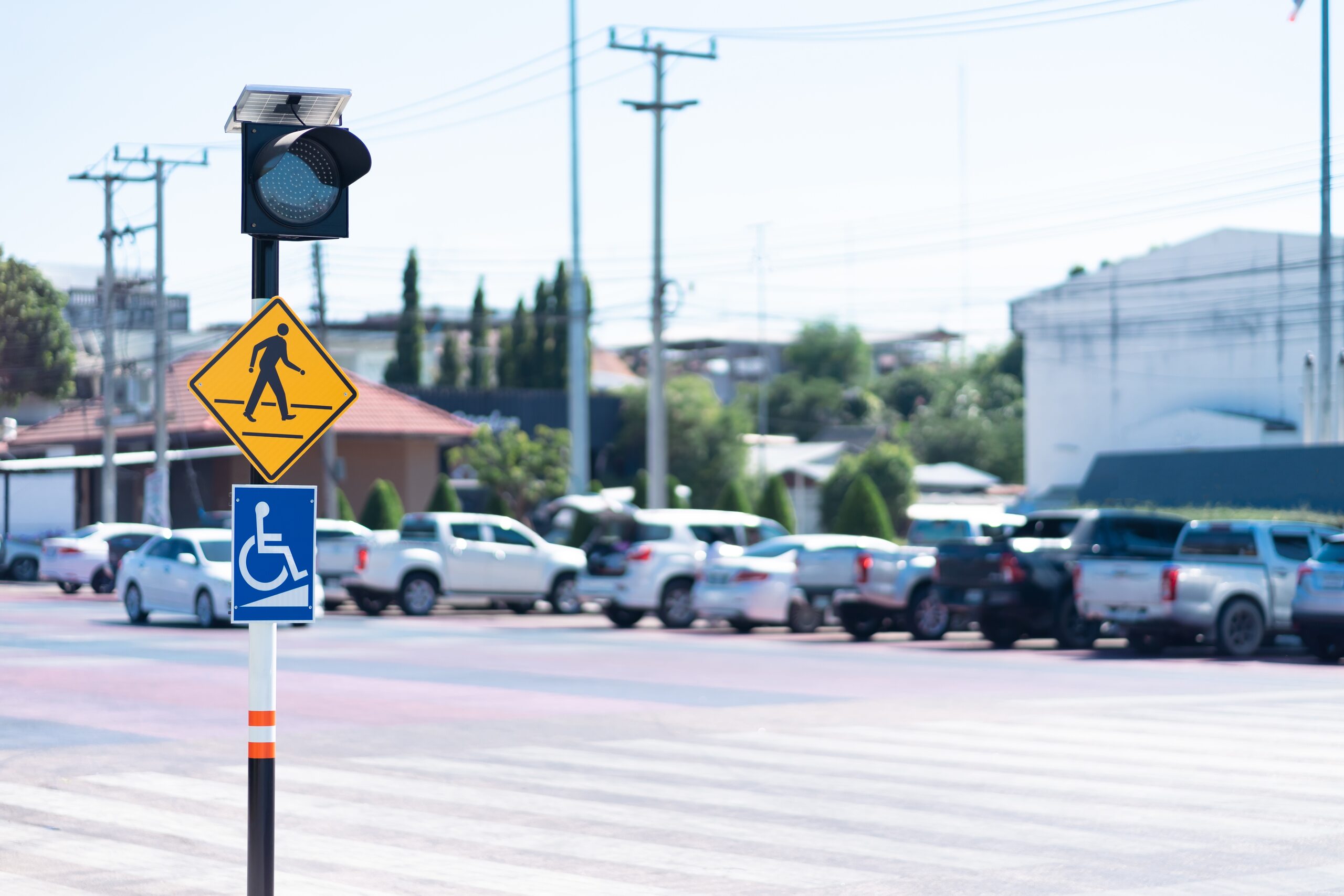
Crossing Wyoming Avenue on a lunch break, waiting for the walk signal at Lackawanna Avenue, or walking a few blocks home through a Green Ridge side street: none of that should require gambling with your life. Pennsylvania law gives pedestrians real protection, and most people never learn how much until they need it.
When a driver fails to yield and strikes someone on foot, the claim that follows almost always turns on fault rather than on whether the injuries are real.
The Slocum Firm represents pedestrians throughout Scranton and northeastern Pennsylvania who were doing everything right when a driver failed to see them, failed to yield, or simply was not paying attention. We practice from our office in Scranton, in Lackawanna County, and we build these claims around the evidence that answers a fault argument before it is made.
Pedestrian claims start from a different place than car claims. In a two-car collision both sides arrive with insurers, adjusters, and a shared vocabulary for what happened.
A pedestrian arrives with an account of the crash and not much else, usually while still recovering. Closing that gap early is most of what the first weeks of a pedestrian case are for.
If a driver struck you while you were walking in Scranton, call The Slocum Firm at (570) 209-7376 before you give a recorded statement or accept any offer. We answer at any hour, and the conversation costs nothing.
Pennsylvania Law Puts the Burden on Drivers, Not Walkers

Under 75 Pa.C.S. § 3542, a driver must yield to a pedestrian crossing within a marked or unmarked crosswalk whenever traffic signals are not present or not operating. That protection reaches far more intersections than most people realize, because Pennsylvania treats the space where a sidewalk would logically continue across a street as a crosswalk whether or not anyone painted lines on it.
The same section carries a rule almost nobody knows. Where a vehicle has stopped at a crosswalk to let someone cross, § 3542(c) prohibits a driver approaching from behind from overtaking and passing it. That is the exact sequence behind a large share of serious pedestrian crashes, and it puts the duty squarely on the second driver.
Pedestrians carry duties too. Section 3542(b) says a person may not suddenly leave a curb into the path of a vehicle too close to stop, and 75 Pa.C.S. § 3543 requires anyone crossing outside a crosswalk to yield to traffic already on the roadway.
Those duties are narrower than they sound. Section 3543(c) restricts mid-block crossing only between adjacent signalized intersections in urban districts, and none of it displaces a driver’s separate obligation to keep a proper lookout and stop in time.
How Does Fault Get Decided in a Pedestrian Claim?
Fault is contested in almost every pedestrian claim, and the same handful of arguments come up case after case: the person crossed mid-block instead of using the crosswalk, the person was wearing dark clothing at night, the person was looking at a phone, the person stepped out without warning.
Some of those claims have nothing to do with what actually happened, and some are exaggerated far past what the facts support. A pedestrian wearing a dark jacket did not cause a driver to run a red light. Someone glancing at a phone before stepping off a curb with the walk signal in their favor did not create the hazard that struck them.
Our lawyers pull traffic camera footage, canvass witnesses near the scene before memories fade, and request cell phone and telematics records from the at-fault driver when distraction is suspected. That evidence usually tells a more complete story than the initial report does.
Timing matters here more than most people expect. Surveillance footage from nearby businesses often gets overwritten within days, and witnesses who saw the crash from across the street move on with their lives quickly if no one takes their information. The earlier we get involved, the more of that evidence still exists to work with.

Where Do Scranton Pedestrian Crashes Happen?
Certain patterns repeat across northeastern Pennsylvania. The most common include:
- Drivers failing to yield to pedestrians already in a crosswalk
- Distracted driving, particularly texting, in the downtown business district
- Vehicles turning right or left without checking for someone already crossing
- Speeding through residential streets where children and commuters walk daily
- Drunk driving, which spikes sharply after dark
- Poor visibility from weather or low light, where drivers are still required to adjust their speed accordingly
Certain corridors see this play out more often than others. The Wyoming Avenue and Lackawanna Avenue intersection downtown carries heavy foot traffic mixed with turning vehicles, and it produces a steady stream of close calls and actual collisions. Mulberry Street and the Providence Square area present similar risks where commercial activity meets residential foot traffic.
Crossings near the University of Scranton and Lackawanna College see a surge of student pedestrians at hours when drivers are less alert, particularly around class changes and evening events. Quieter residential blocks in South Scranton and Green Ridge carry their own danger, since drivers often treat them as speed corridors precisely because they look empty.
If you or a loved one were injured by a fleeing driver in Pennsylvania, read this guide to learn how uninsured motorist coverage and state plans can help secure full compensation even if the driver is never identified.
Why Pedestrian Claims Are Valued Differently
A pedestrian has none of the structural protection a vehicle provides, which is why these claims sit at the severe end of the range. Traumatic brain injury and spinal cord injury claims are heavily represented, and the most serious of them become wrongful death claims.
What that means for the claim is that the costs do not stop when treatment does. Time away from work, a reduced capacity to do the job someone held before, and care that continues for years all have to be documented rather than estimated.
We build every pedestrian case around that projection rather than around a current bill total. A settlement that covers the hospital stay and nothing else leaves a predictable gap.
Can I Still Recover Compensation If I Was Partly at Fault?
Often, yes. Pennsylvania uses modified comparative negligence, which means your own share of fault reduces what you recover rather than eliminating it.
Under 42 Pa.C.S. § 7102 a pedestrian can recover as long as their share is 50 percent or less, with the award reduced by that percentage. Only at 51 percent or greater is recovery barred completely.
Say a pedestrian crossed mid-block instead of walking to the nearest crosswalk, and a driver who was speeding and looking at a phone struck them. The mid-block crossing is the fact that gets pressed hardest.
Weighed against speeding, distraction, and a failure to keep a proper lookout, one pedestrian decision rarely carries the greater share. Making sure the full picture gets built and presented, rather than letting a single detail dominate, is most of the work.
This is where the difference between an early settlement offer and a fully developed case shows up most clearly. A first offer usually arrives before any accident reconstruction and before the medical picture is complete, which means it is priced on an incomplete record. We negotiate from the developed version of the case rather than the early one.

What Can a Pedestrian Claim Recover?
Depending on the severity of the injury and the circumstances of the crash, compensation may include:
- Past and future medical bills
- Lost wages and reduced future earning capacity
- Pain and suffering
- Permanent disability or disfigurement
- Loss of enjoyment of life
- Funeral and burial expenses in wrongful death cases
Pennsylvania gives injured pedestrians two years from the date of the crash to file a lawsuit under 42 Pa.C.S. § 5524. That deadline arrives faster than it sounds for someone still working through treatment, so early legal guidance matters well before a case is ready to settle.
Two situations change the clock. For an injured child, 42 Pa.C.S. § 5533 pauses the two years until the child turns 18, so a child struck at 10 generally has until their 20th birthday.
A claim involving a government body runs the opposite way. Written notice is generally due within six months under 42 Pa.C.S. § 5522, and damages against a local agency are capped at $500,000 for everyone injured in the same incident combined under 42 Pa.C.S. § 8553. If a city vehicle, a defective signal, or a road condition was involved, that six-month clock is the one that matters.
How We Handle Serious Pedestrian Cases
The Slocum Firm was founded in 2009 and has represented injured Pennsylvanians ever since. We practice from Scranton, and our attorneys are admitted to the United States District Courts for the Eastern and Middle Districts of Pennsylvania.
Every client works directly with the attorney handling their case rather than an answering service or an intake team, and that attorney is reachable at any hour. Across our practice we have recovered in more than 95 percent of the cases we have taken, and our attorneys bring more than 50 years of combined experience.
Results may vary. Prior case outcomes do not guarantee similar results.
We take pedestrian cases on contingency, so you pay nothing upfront and owe no attorney fee unless we recover compensation for you. Case expenses are handled separately from the attorney fee, and we will explain exactly how they work before you decide anything. Call The Slocum Firm at (570) 209-7376 at any hour to find out where your claim actually stands.
FAQs: Scranton Pedestrian Accident Lawyer
Here are answers to questions pedestrian accident victims and their families often ask us in Scranton and the surrounding region.
What if a car passed a stopped vehicle and hit me in the crosswalk?
That is one of the clearest driver-fault patterns there is. Section 3542(c) prohibits a driver from overtaking and passing a vehicle that has stopped at a crosswalk to let someone cross. If that is what happened to you, the statute itself is the starting point for the claim.
What if I was crossing mid-block when I was hit? Can I still recover?
Possibly. Crossing outside a marked crosswalk creates a duty to yield to traffic, but that does not automatically make you majority at fault. If the driver was speeding, distracted, or otherwise negligent, you may still recover damages reduced by your share of responsibility, as long as that share is 50 percent or less.
How long do I have to file a pedestrian accident lawsuit in Scranton?
Generally two years from the date of the crash under Pennsylvania law. Waiting close to that deadline makes it harder to gather fresh evidence, so contacting a lawyer sooner rather than later protects your case.
What if the driver who hit me was uninsured?
You may still have options. Many pedestrians carry uninsured motorist coverage through a household auto policy even if they were not driving at the time of the crash, and that coverage can sometimes apply to a pedestrian collision.
What if my child was hit while walking to school?
The deadline works differently. Under 42 Pa.C.S. § 5533 the two-year clock does not start until a child turns 18, so a child struck at 10 generally has until their 20th birthday. That extra time is not a reason to wait, because the evidence a claim depends on disappears on its own schedule.
What types of compensation can a pedestrian accident victim recover in Pennsylvania?
Victims may recover medical expenses, lost income, pain and suffering, permanent disability, and related losses. Families who lost a loved one may pursue a wrongful death claim covering funeral costs and the financial and personal loss the family has suffered.
Hit While Walking in Scranton? Call Before the Footage Is Gone.
If a driver struck you while you were walking in Scranton or anywhere in northeastern Pennsylvania, call The Slocum Firm at (570) 209-7376 at any hour. You will reach an attorney directly, and the first conversation costs nothing.
Bring whatever you have, photos, a copy of the police report, medical bills, and we will tell you honestly what the record supports. There is no attorney fee unless we recover compensation for you, and we will explain how case expenses are handled before you decide anything.