
When a commercial truck crashes into your vehicle, you’re entitled to compensation that accounts for the full imbalance of that crash, not just what the trucking company’s insurer offers to close the file fast. The Slocum Firm takes on trucking companies and their insurers because someone has to match the resources on the other side of the table. Interstate 81 through downtown Scranton carries some of the heaviest commercial truck traffic in northeastern Pennsylvania, and when an 80,000-pound rig crashes into a passenger vehicle, the physics rarely leave room for a minor injury.
Call (570) 209-7376 and speak directly with an attorney, 24 hours a day, with no fee unless we recover money for you.
Why Truck Accident Cases Are Not Car Accident Cases
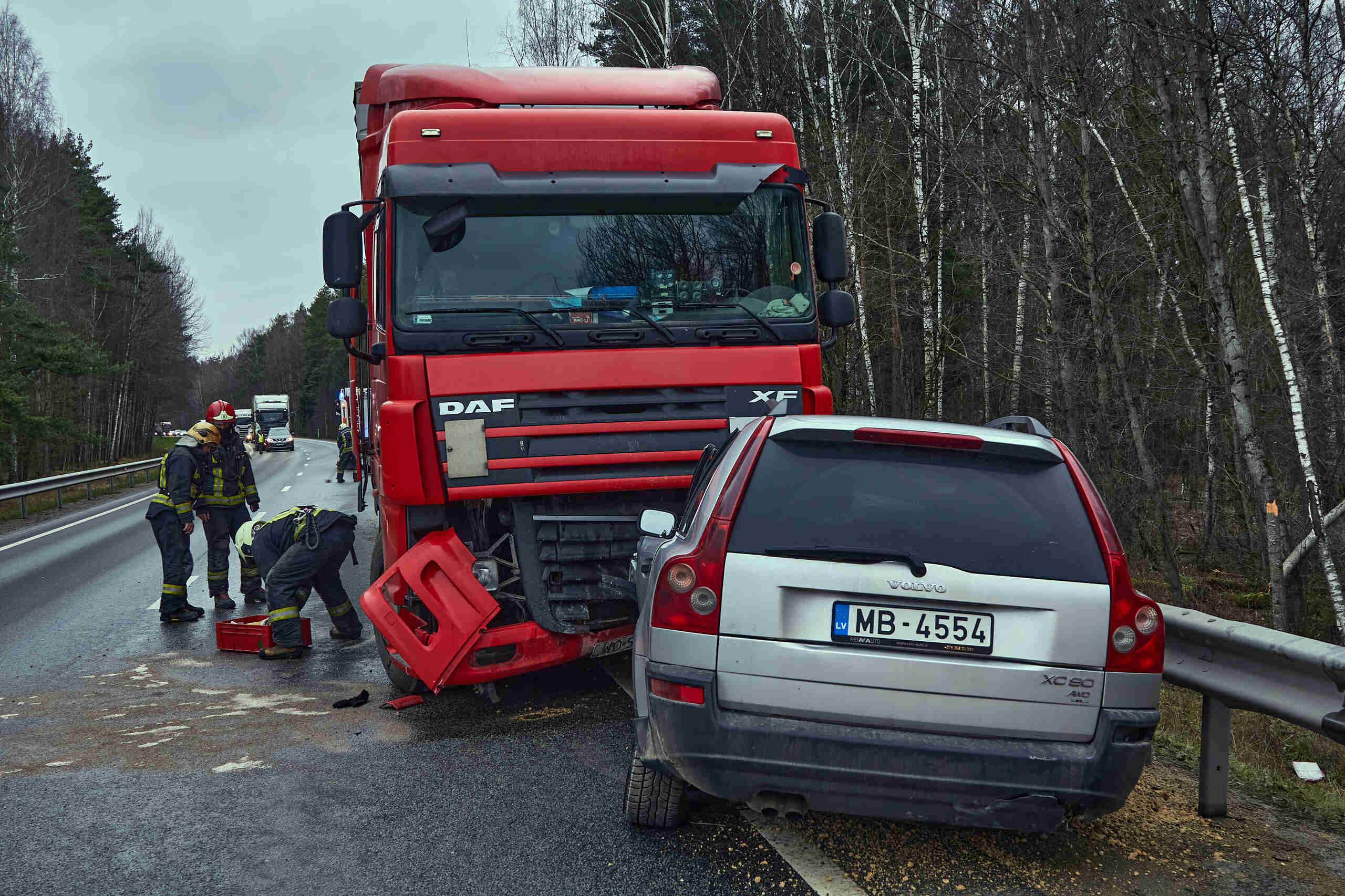
A standard car accident claim usually involves two drivers and two insurance policies. A truck accident case can involve the driver, the trucking company that employed him, the company that loaded the cargo, a separate maintenance contractor, and sometimes the manufacturer of a defective part, each with its own lawyers and its own insurance coverage.
Commercial trucking policies also carry far higher limits than a typical auto policy, often reaching into the millions, and the insurers who cover those policies employ adjusters who handle nothing but trucking claims. Federal regulations from the Federal Motor Carrier Safety Administration apply on top of ordinary Pennsylvania negligence law, adding a layer of rules that most general car accident attorneys rarely touch.
None of this happens by accident. Trucking companies and their insurers train specifically for these cases, which is exactly why the response on your side needs to match that level of preparation from the first phone call, not weeks into the claim once positions have already hardened.
What Evidence Disappears Within Days of a Truck Crash?
Truck accident cases often live or die on evidence that trucking companies control and routinely erase on a schedule, which is why speed matters more here than in almost any other kind of injury case.
- Electronic logging device (ELD) data showing the driver’s actual hours behind the wheel
- Black box or ECM data recording speed, braking, and impact force in the seconds before the crash
- Driver hours-of-service logs required under 49 CFR Part 395
- Pre-trip inspection records and vehicle maintenance history
- The trucking company’s internal safety and violation records
- The driver’s background check and motor vehicle record
- Cargo manifests showing weight and loading details
- Dashcam footage from the truck itself or nearby vehicles
Some of this data gets overwritten automatically within days or weeks unless a formal preservation letter goes out immediately, which is one of the first things we do on every truck accident case we take.
Don’t wait while evidence disappears.
Federal Regulations Trucking Companies Break All the Time
The Federal Motor Carrier Safety Administration sets rules that apply to nearly every commercial truck on I-81, and violations show up in almost every serious crash we investigate. Hours-of-service limits under 49 CFR Part 395 restrict how long a driver can be behind the wheel without rest, yet fatigue remains one of the most common factors in the crashes we see on that corridor.
Commercial driver’s license requirements under 49 CFR Part 383 govern who is even qualified to operate an 80,000-pound rig, and drivers sometimes get behind the wheel without meeting them fully. Weight limits, cell phone restrictions, pre-trip inspection requirements, and mandatory drug testing round out the rules that get skipped when a trucking company is behind schedule and trying to make up lost time.
A single documented violation of any of these regulations can become the centerpiece of a case, because it shifts the argument away from an ambiguous judgment call and toward a black-and-white broken rule a jury can understand immediately. We pull the driver’s qualification file, inspection reports, and any prior citations against the trucking company as a matter of course on every case we open, since a pattern of violations tells a very different story than a single isolated mistake.
What Actually Causes Truck Crashes Around Scranton?
Fatigued driving shows up constantly on I-81, especially on overnight runs where a driver is pushing to make a delivery window before hours-of-service rules force a break. Overloaded cargo is its own recurring problem in this region, tied to the industrial and mining traffic that moves through Lackawanna County on a daily basis.
Brake failure causes some of the most catastrophic crashes we handle, particularly on the grades along I-84 and I-380, where a truck builds speed it can’t shed in time. Improper lane changes on the narrower stretches of Route 6 and Route 11 catch passenger vehicles that a truck driver simply didn’t see in a blind spot. Winter conditions bring jackknife accidents that can shut down I-81 for hours and leave multiple vehicles crushed in the resulting chain reaction.
Construction zones add another real layer of risk along I-81 through the Scranton area, where lane shifts and reduced speed limits catch drivers who are already fatigued or running behind schedule. A truck that fails to slow down through a work zone doesn’t just risk its own driver; it puts every passenger vehicle merging around it in danger, and these crashes tend to produce some of the most severe injuries we investigate.
Who Can Be Held Liable When a Truck Hits You?
The driver is rarely the only party responsible. Under Pennsylvania law, a trucking company can be held liable for its driver’s actions through vicarious liability, and separately liable for its own negligence in hiring, training, or supervising that driver, a theory sometimes described as negligent entrustment.
The company responsible for loading the cargo can share liability if improper loading caused a rollover or shifted weight during a crash. A third-party maintenance provider can be liable if it certified brakes or tires as safe when they weren’t, and a parts manufacturer can be liable if a defective component failed at the worst possible moment. Multiple defendants often mean multiple insurance policies, which changes what a case is realistically worth.
Some trucking companies lease their trucks and lease their drivers, layering franchise agreements and independent contractor arrangements on top of an already complicated corporate ownership structure. Figuring out who actually controlled the driver, the vehicle, and the safety decisions on the day of the crash often requires pulling corporate filings, insurance certificates, and lease agreements that a typical passenger vehicle claim never touches.
Sorting out which of these parties actually caused your specific crash, and how much each one’s insurance can realistically contribute, is exactly the kind of investigation that separates a Scranton personal injury lawyer working a routine claim from a trucking case built to withstand a courtroom fight.

How Much Is a Catastrophic Truck Accident Case Worth?
Truck crashes produce a disproportionate share of the most severe injuries we see: traumatic brain injury, spinal cord damage, crush injuries, and amputations that change a person’s life permanently. Cases involving these injuries routinely carry multimillion-dollar value once medical costs, lost future earning capacity, and long-term care needs are fully documented and presented.
A spinal cord injury alone can mean decades of specialized ongoing medical care, home modifications, and lost income that a settlement needs to account for in full, not just the bills that have already arrived. We work with medical experts and life care planners to project those future costs accurately, because a case that undervalues a client’s future needs cannot be renegotiated once it settles.
When a truck crash results in a death, the case becomes a wrongful death claim instead, and Pennsylvania law allows a different set of damages to be pursued on behalf of the surviving family. Our Scranton wrongful death lawyer team works on these cases alongside our truck accident attorneys because the two areas overlap constantly in the crashes we handle on I-81, and families need attorneys already fluent in both.
Two Years to File, But Days to Preserve the Proof
Pennsylvania gives you two years from the date of the crash to file a lawsuit under 42 Pa.C.S. § 5524, the same statutory deadline that applies to a standard Scranton car accident claim. The difference in a truck accident case is that the deadline to preserve critical evidence is measured in days, not years.
Black box data can be overwritten the next time the truck goes back into service. Electronic logs can be deleted or altered on a company’s internal system long before any lawsuit gets filed. Waiting even two or three weeks to get an attorney involved can mean the single most important piece of evidence in your case is already gone by the time anyone goes looking for it.
Don’t wait on evidence that won’t wait for you.
The 51 Percent Trap Trucking Insurers Will Set for You
Pennsylvania follows a modified comparative negligence rule under 42 Pa.C.S. § 7102, and trucking insurers use it aggressively. You can still recover damages if you were 50% or less at fault for the crash, but the defense only needs to convince a jury you were 51% or more at fault to eliminate your recovery.
In a truck crash, that argument often centers on claims about your speed, your lane position, or your reaction time in the final seconds before impact, even when a documented hours-of-service violation or brake failure was the real underlying cause of what happened. A well-resourced defense team knows exactly how to build that argument, and a jury that hears it without a strong counter-narrative can be persuaded by it. The case for your side needs to be built just as carefully, starting the same week as the crash, not months later.

Why The Slocum Firm Takes on Trucking Companies Scranton Families Can’t Face Alone
The Slocum Firm has represented injured Pennsylvanians since 2009, and truck accident cases require a different level of resources than a standard Scranton car accident lawyer case, from accident reconstruction to a working knowledge of FMCSA regulations that most firms rarely touch. We built our practice to match what trucking companies and their insurers bring to the table, not to be outmatched by it.
Our recovery rate has stayed above 95%, and every client who calls reaches an attorney directly, 24 hours a day, not an intake coordinator. Results may vary. Prior case outcomes do not guarantee similar results.
We know these cases move fast in the first days after a crash, which is exactly when evidence preservation letters need to go out and when the trucking company’s own investigators are already building their side of the story. That urgency shapes how we staff every new truck accident case from the first phone call, not after the file has already been assigned.
If a commercial truck changed your life on I-81, Route 6, Route 11, I-84, or I-380, contact The Slocum Firm at (570) 209-7376 before you talk to anyone representing the trucking company.
FAQs: Scranton Truck Accident Lawyer
Here are answers to the questions Scranton truck accident clients ask most in the first days after a crash.
Who can be held liable in a truck accident in Pennsylvania?
Liability can extend beyond the driver to the trucking company, the cargo loader, a maintenance contractor, or a parts manufacturer, depending on what caused the crash. Pennsylvania law allows multiple parties to be pursued at once when more than one party’s negligence contributed to what happened on the road.
How long do I have to file a truck accident lawsuit in Scranton?
You generally have two years from the date of the crash to file suit under Pennsylvania law. That said, evidence like black box data and electronic logs can disappear within days, so contacting an attorney immediately matters far more than the two-year deadline alone suggests.
What is the FMCSA, and how does it affect my truck accident case?
The Federal Motor Carrier Safety Administration sets federal safety rules for commercial trucking, covering everything from hours of service to driver qualifications. A documented violation of these regulations can become powerful evidence that a trucking company or driver acted negligently in the moments leading up to a crash.
Why should I hire a lawyer immediately after a truck accident?
Trucking companies often begin building their defense within hours of a crash, sending investigators to the scene and preserving evidence that supports their position. Getting an attorney involved immediately helps secure critical evidence before it is lost, obtain driver logs, maintenance records, and electronic data, and protect you from giving recorded statements that insurance companies may later use to challenge or reduce your claim.
How much is a truck accident case worth in Pennsylvania?
It depends on the severity of the injury, the number of liable parties, and how well the evidence supporting the claim gets documented and preserved early on. Catastrophic injuries like traumatic brain injury or spinal cord damage often push case values into the millions once future medical needs and lost earning capacity are fully accounted for.
Every hour you wait is evidence that the Trucking Company Doesn’t Have to Explain
If you were hit by a commercial truck in Scranton or anywhere in northeastern Pennsylvania, call The Slocum Firm immediately at (570) 209-7376. Critical evidence, including black box data and driver logs, disappears within days of a crash. We’re available 24 hours a day; you speak directly with an attorney who knows this corridor, and you pay nothing unless we recover for you.