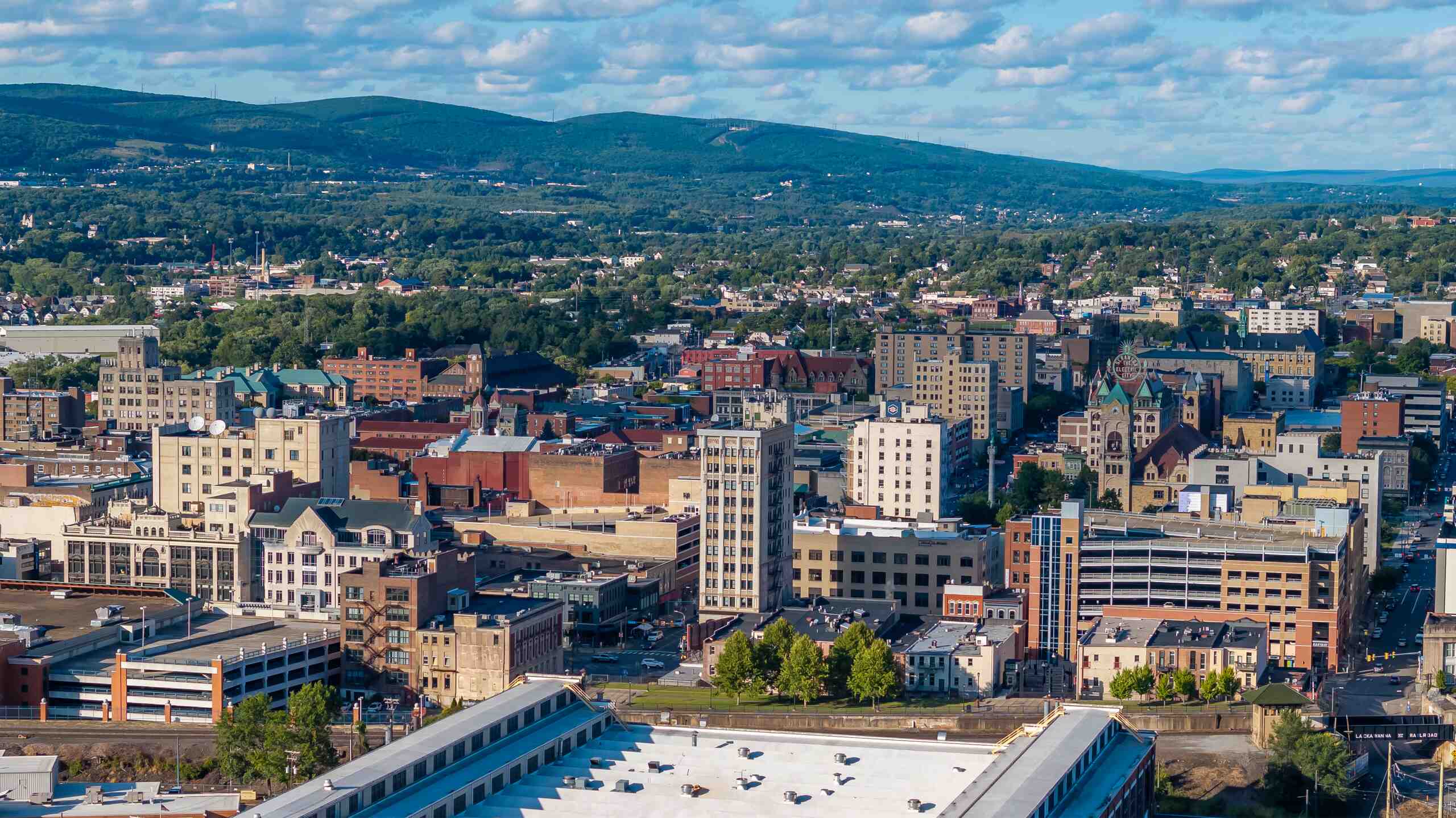

The Pocono foothills, Route 6 through Carbondale, and the long straightaways of Route 11 past Clarks Summit draw riders from across northeastern Pennsylvania every season. That same scenery brings real risk. A driver glances at a phone at Lackawanna and Wyoming, or merges onto I-81 without checking a blind spot, and a rider is the one who pays for it.
Motorcycle claims are contested on fault far more often than car claims are, and usually on assumptions rather than evidence. The Slocum Firm investigates these crashes on our own terms and builds the record that answers those assumptions before they harden.
Riders who call us are usually dealing with more than a bent frame or a totaled bike. They are managing emergency room bills, missed shifts at work, and a claim where fault is already being questioned. That combination is exhausting, and it is exactly the moment when a rider needs someone in their corner who knows how motorcycle claims actually get built and won in Lackawanna County.
Fault Gets Questioned in Almost Every Motorcycle Claim
The same three arguments come up in motorcycle claims over and over: the rider was speeding, the rider was weaving between lanes, the rider was hard to see. None of the three requires evidence.
Each requires only an assumption, and assumptions about riders tend to stick with people who have never ridden. That is the gap a motorcycle case has to close.
It starts early, sometimes within days of the crash, with questions about speed and lane position asked before treatment is finished. Answers given then become part of the file permanently.
We pull traffic camera footage where it exists, track down independent witnesses before memories fade, and bring in crash reconstruction when fault is contested. That work turns an assumption back into an argument, which is something evidence can answer.
We also document the physical realities that adjusters tend to skip over. A motorcycle’s smaller profile does not make a rider careless, and a rider’s lane position often has a legitimate safety reason behind it, such as avoiding a pothole or staying visible in a driver’s mirror. Explaining those realities alongside the physical evidence from the scene is usually what closes the gap.

What Causes Motorcycle Accidents in Scranton and Northeastern Pennsylvania?
Most motorcycle crashes in this region trace back to drivers who simply did not look. Left-turn collisions, where an oncoming car turns directly into a rider’s path, remain one of the most common and dangerous crash types on roads like Wyoming Avenue and the Scranton/Dunmore corridor. Failure to yield at intersections ranks close behind, particularly where visibility is limited or traffic moves fast.
Other frequent causes include:
- Lane changes made without checking a blind spot for a motorcycle already alongside
- Rear-end collisions when a driver misjudges how quickly a motorcycle can stop
- Dooring incidents in parked car zones near downtown Scranton
- Road hazards such as gravel, potholes, and railroad tracks, which turn up often on secondary roads through Carbondale, Honesdale, and Dalton
- Drunk and impaired driving, especially late at night on I-81 and Route 6
Riders on I-81, the Route 6 corridor through Carbondale and Honesdale, and Route 11 through Clarks Summit and Dalton regularly face all of these risks. That is why we look closely at where a crash happened on those specific roads rather than treating every case the same.
Seasonal conditions add another layer. Northeastern Pennsylvania’s mix of steep grades, older pavement, and sudden weather shifts means road hazards appear and disappear quickly, and a hazard that caused your crash may already be repaired by the time an adjuster looks into it. That is one more reason to document the scene as soon as possible after a crash, whenever it is safe to do so.
When the hazard itself caused the crash, the defendant may not be a driver at all. A dangerous condition of a street owned by a municipality can support a claim under the streets exception to the Political Subdivision Tort Claims Act, at 42 Pa.C.S. § 8542(b)(6), but only with proof the agency knew about the hazard or reasonably should have.
Those claims run on a much shorter clock. Written notice is generally due within six months under 42 Pa.C.S. § 5522, and damages against a local agency are capped at $500,000 for everyone injured in the same incident combined under 42 Pa.C.S. § 8553.
Does Riding Without a Helmet Hurt My Pennsylvania Injury Claim?
Riding without a helmet does not automatically bar you from recovering compensation in Pennsylvania, though insurers will try to use it against you anyway. Under 75 Pa.C.S. § 3525, a rider 21 or older may legally ride without a helmet if they have been licensed to operate a motorcycle for not less than two full calendar years, or have completed a safety course approved by PennDOT or the Motorcycle Safety Foundation. Riders under 21 must wear headgear meeting departmental standards.
There is one part of § 3525 the exemptions do not touch. Subsection (b) requires approved eye protection, and the age and course exemptions run only to the helmet requirement, not to that one.
A helmet argument, if it is raised, goes to the extent of the injuries rather than to who caused the crash. Those are two different questions and they should not be allowed to merge.
Pennsylvania uses modified comparative negligence, which means your own share of fault reduces what you recover rather than eliminating it. Under 42 Pa.C.S. § 7102 you can recover as long as your share is 50 percent or less, with recovery barred at 51 percent or more. That rule governs who caused the crash, not what a rider was wearing.
Pennsylvania gives most motorcycle injury claims two years from the date of the crash, and that clock is unforgiving. There is one meaningful exception. Under 42 Pa.C.S. 5533(b), a rider who was under 18 at the time of the crash does not start the two-year clock until the 18th birthday, which means a claim from a teenage rider can stay alive well into adulthood.
The bike itself is evidence, and it does not stay available for long. Salvage yards move quickly once an insurer declares a total loss, and once the motorcycle is gone, so is the chance to have an engineer examine impact points, brake condition, and lighting. Tell us before you authorize anyone to take it, and keep your helmet, jacket, and gloves in the condition they were in after the crash.
We also look at whether a helmet argument reaches your injuries at all. A reduction applied across an entire claim is a very different proposition from one tied to a specific injury, and the two should not be treated the same.

What Compensation Can You Recover After a Motorcycle Crash?
A motorcycle offers none of the structural protection a car does, which is why these claims sit at the severe end of the range. Traumatic brain injury, spinal cord injury and amputation claims are all heavily represented among the motorcycle cases we handle.
That severity is also why the claim has to be built around long-term cost rather than current bills. A settlement priced on the first hospital stay funds a fraction of what a serious motorcycle injury actually costs.
Depending on the facts of your crash, compensation may include:
- Medical bills, both past and future
- Lost wages and diminished earning capacity
- Pain and suffering
- Permanent disfigurement, including road rash scarring
- Long-term disability and future medical care
- Property damage, including bike repair or replacement
Riders are often told their own auto policy’s limited tort election restricts a motorcycle claim. The statute points the other way. Section 1705(d)(3) preserves full tort rights for a person injured while occupying a vehicle other than a private passenger motor vehicle, and 75 Pa.C.S. § 1702 defines that term as a four-wheel motor vehicle.
A motorcycle is not four-wheeled. A motorcycle-only policy is also not a private passenger policy, which means a rider insured only for a motorcycle never made a tort election in the first place.
No Pennsylvania appellate decision squarely settles this, so it is worth having reviewed rather than conceded. What it is not is a reason to assume your claim is limited before anyone has read your policy.
Two years sounds like a long time, and it is not. Evidence at the scene disappears within days, witnesses become harder to reach every month, and a claim against a municipality can expire in six. The practical deadline on a motorcycle case is almost always earlier than the legal one.
Why Fault Is Where These Cases Are Won
In a serious motorcycle claim the injuries are usually well documented and the recovery timeline is long, which makes severity difficult to dispute. What remains disputable is fault. That is why these cases turn on the crash investigation more than on the medical file, and why the first weeks matter more here than in a typical claim.
What Working With Us Actually Looks Like
The Slocum Firm was founded in 2009 and has represented injured Pennsylvanians ever since. We practice from our office here in Scranton, in Lackawanna County, and our attorneys are admitted to the United States District Courts for the Eastern and Middle Districts of Pennsylvania.
Every rider who calls reaches an attorney directly, day or night, rather than an intake line. Across our practice we have recovered in more than 95 percent of the cases we have taken, and our attorneys bring more than 50 years of combined experience.
Results may vary. Prior case outcomes do not guarantee similar results.
We take motorcycle cases on contingency, so you pay nothing upfront and owe no attorney fee unless we recover compensation for you. Case expenses are handled separately from the attorney fee, and we will explain exactly how they work before you decide anything. Call The Slocum Firm at (570) 209-7376 at any hour to find out where your claim actually stands.

FAQs: Scranton Motorcycle Accident Lawyer
These are the questions riders ask us most often in the weeks after a crash.
How much does it cost to hire a motorcycle accident lawyer in Scranton?
Nothing upfront. We work on contingency, meaning our fee comes out of your settlement or verdict, and only if we win. If we do not recover compensation for you, you owe us nothing.
Should I give a recorded statement to the other driver’s insurance company?
Not before you have spoken with an attorney. A recorded statement becomes a permanent part of the claim file, and wording chosen quickly, on questions that sound routine, is difficult to revisit later.
What if the police report blames me for the crash?
A police report is not the final word on fault. Officers sometimes arrive after the fact and rely on statements from the driver or bystanders who assume the motorcyclist caused the crash. We regularly build independent evidence that tells a different story than the initial report.
How long will my motorcycle accident case take to resolve?
It depends mostly on your medical recovery, because a claim should not be valued before the long-term picture is clear. Serious injuries take longer for exactly that reason, and moving faster than the medical record usually costs more than it saves.
Can I still file a claim if the at-fault driver was uninsured?
Possibly. If you carry uninsured or underinsured motorist coverage on any policy in your household, it may reach a motorcycle crash. We review every policy involved, including your own, before telling you what a claim is actually worth.
Call Before the Scene Changes
If you are recovering from a motorcycle crash in Scranton or anywhere in northeastern Pennsylvania, call The Slocum Firm at (570) 209-7376 at any hour. You will speak directly with an attorney about what your claim would require and what the record currently supports.
Bring the police report, whatever photos you managed to take, and your questions. There is no attorney fee unless we recover compensation for you, and we will explain how case expenses are handled before you decide anything.