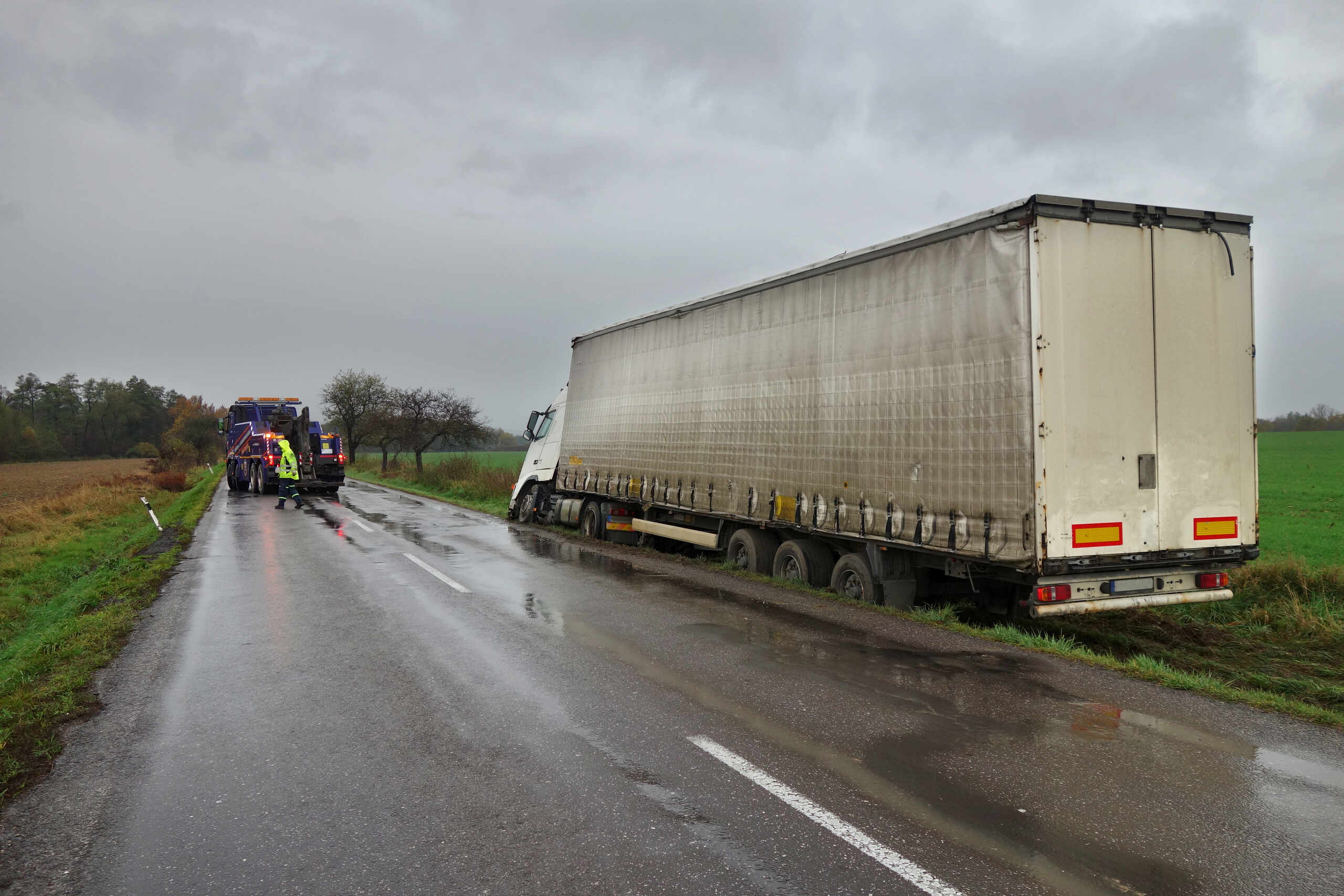
A tractor-trailer with a national carrier’s logo rear-ends your vehicle on I-81 near Scranton, and now you’re dealing with serious injuries and rising medical bills. Then you hear the trucking company say, “That driver isn’t our employee.” It can feel like they’re trying to avoid responsibility entirely.
You’re likely wondering, “Can I sue the trucking company if the driver owns his own truck?” This is a reasonable concern and complex question when determining who may be held liable after a commercial vehicle crash.
Many trucking companies structure their operations to create distance between themselves and drivers. But under federal law and Pennsylvania legal principles, that strategy does not always work. In many cases, the company can still be held responsible.
Let’s review how trucking company liability in PA works and how the “independent contractor” defense can be challenged. You may be surprised how a few small details can make a meaningful difference in your case.
Key Takeaways About Trucking Company Liability in Pennsylvania
- Trucking companies often label drivers as independent contractors to limit their own liability.
- Federal law may still hold the company responsible under the statutory employee doctrine.
- If the company’s logo or placard is on the truck, liability may attach regardless of the contract under the logo liability rule.
- These cases involve vicarious liability, meaning the company can be held responsible for the driver’s actions.
- Identifying all responsible parties is key to accessing full compensation after a truck accident.
Why Trucking Companies Use the “Independent Contractor” Defense
After a truck accident, it is common for trucking companies to argue that the driver was not their employee to avoid responsibility for the accident victim’s losses. Instead, they may claim the driver was an independent contractor who owned their own truck and operated independently.
This distinction matters because companies are generally more likely to be legally responsible for employees’ actions than for those of independent contractors. From a business perspective, this model allows companies to:
- Reduce operational costs
- Shift responsibility onto drivers
- Attempt to limit legal exposure after accidents
However, this classification is not always the final word when it comes to liability.
What Is Trucking Company Liability in PA?
Trucking company liability in Pennsylvania refers to situations in which a carrier is held responsible for a driver’s actions in a crash. This often involves the legal concept of vicarious liability, which means a company can be legally responsible for the negligence of someone acting on its behalf.
In a traditional employment setting, this is straightforward. But in the trucking industry, where many drivers are classified as independent contractors, the analysis becomes more complex.
That is where federal law comes into play.
The Federal Statutory Employee Doctrine Explained
The federal statutory employee doctrine is one of the most important tools for holding trucking companies accountable. Under federal motor carrier regulations, a company that leases a truck and displays its name or placard on that vehicle may be considered responsible for its operation, even if the driver is technically an independent contractor.
In simple terms, if the truck is operating under the company’s authority, the company may be treated as the driver’s employer for liability purposes. This doctrine helps prevent companies from avoiding responsibility simply by structuring their drivers’ contracts in a certain way.
The “Logo Liability” Rule: What It Means for Your Case
You may have noticed that most commercial trucks display the name or logo of the company they are operating under. This is not just branding—it can have legal significance.
The logo liability rule suggests that when a company’s name or placard is displayed on a truck, it signals that the vehicle is operating under that company’s authority. As a result, the company may be held liable for the driver’s negligence.
This means that even if the driver owns the truck or operates as an independent contractor, the company’s involvement may still create legal responsibility for your losses after a crash caused by the truck driver.
How Lease Agreements Affect Liability
Trucking companies often rely on lease agreements to define their relationship with drivers. These agreements may state that the driver is an independent contractor and is responsible for their own actions. However, these contracts do not automatically override federal regulations or legal principles.
Courts often look beyond the contract language to determine:
- Who controlled the operation of the truck
- Whether the truck was operating under the carrier’s authority
- How the relationship functioned in practice
In many cases, the existence of a lease agreement does not prevent a finding of liability against the company.
Why This Legal Strategy Matters After a Truck Accident
Truck accidents often result in serious injuries, and the financial impact can be significant. While the driver may have limited insurance coverage, trucking companies typically carry much larger policies. This makes it important to identify whether the company can be held responsible to pay for your losses.
Piercing the independent contractor defense can:
- Expand the available insurance coverage
- Increase the potential value of your claim
- Ensure that responsibility is properly assigned
This is why these legal strategies are so important in truck accident cases.
Suing a Carrier for Driver Negligence
If a truck driver’s negligence caused your injuries, you may be able to pursue a claim against the carrier as well. This can include situations where the driver was distracted or fatigued, violated traffic laws, or failed to follow safety regulations.
By establishing that the driver was acting under the carrier’s authority, it may be possible to hold the company accountable for those actions.
How These Cases Are Investigated
Determining whether a trucking company can be held liable requires careful investigation, including reviewing:
- The truck’s registration and operating authority
- Lease agreements and contracts
- Federal compliance records
- The presence of company logos or placards
- Dispatch and communication records
The goal is to understand the relationship between the driver and the company and how the truck was being operated at the time of the crash. A skilled legal team can gather relevant evidence to help support your claim and present a strong legal argument for the maximum amount of compensation possible.
Why Truck Accident Cases Are Often More Complex
Truck accident cases involve more layers of legal complexity than standard car accidents. In addition to the driver, multiple additional parties may be involved, including:
- The trucking company
- Maintenance providers
- Cargo loaders
- Brokers or logistics companies
Federal regulations also play a major role, adding another level of complexity to these cases. Because of these issues, understanding how liability works is essential to building a strong claim.
It’s crucial to talk to an experienced Scranton truck accident lawyer to fully understand your legal rights after a serious trucking collision. Most reputable law firms offer a free consultation where you can ask questions and better understand the options available under your unique circumstances.
What If the Trucking Company Denies Responsibility?
It is common for trucking companies to deny responsibility after an accident, especially when they believe the independent contractor defense may apply. They may argue that the driver was not their employee, that they did not control the driver’s actions, or that their contract limits their liability in the event of a crash.
However, these arguments are not always decisive. Courts and investigators consider the full picture, including federal regulations and the parties’ actual relationship, when deciding who may be held responsible. Beyond the legal defense used, it is also vital to understand how weather and road conditions impact liability in Pennsylvania crashes.
What Can You Do While Recovering After a Truck Accident?
After a truck accident, your primary focus should be on your health and recovery. At the same time, there are steps you can take that may help support your claim.
Follow your doctor’s treatment plan and attend all appointments throughout your recovery. This not only helps you recover more quickly, but it also documents your injuries and supports your claim for damages.
It is also helpful to keep all records related to your medical care, missed work, and the accident’s impact on your daily life. These details can play an important role in evaluating your claim.
If you are contacted by insurance companies, proceed with caution. Consult with a dedicated truck accident injury lawyer before providing any recorded statements to avoid any misstatements that could harm your case later. Also, don’t accept a settlement offer until a lawyer reviews it because it may not reflect the full impact of your injuries.
Frequently Asked Questions About the Independent Contractor Defense After a Truck Accident
Can a trucking company be liable if the driver owns the truck?
Yes. Ownership of the truck does not automatically determine liability. If the driver was operating under the company’s authority, the company may still be held responsible.
What is vicarious liability in a truck accident case?
Vicarious liability means that one party can be held responsible for the actions of another. In trucking cases, this often applies when a trucking company is held responsible for a driver’s negligence.
How long do I have to file a truck accident lawsuit in Pennsylvania?
In most cases, the Pennsylvania statute of limitations gives you two years from the date of the accident to file a personal injury lawsuit. Working with an accident legal team quickly can help preserve important evidence, especially in cases involving commercial trucking records and federal compliance data.
Are independent contractors always responsible for their own accidents?
Not always. Even if a driver is classified as an independent contractor, federal law and other legal principles may still allow the trucking company to be held liable.
What is a “statutory employee” in a truck accident case?
A statutory employee is a legal concept under federal trucking regulations that allows a driver to be treated as an employee of the trucking company, even if their contract says they are an independent contractor. This typically applies when the driver is operating under the company’s authority, which can make the company responsible for the driver’s actions in a crash.
Can I still file a claim if multiple companies are involved in the trucking operation?
Yes. Truck accident cases often involve several entities, such as the carrier, a freight broker, or a maintenance provider. Each company may have played a role in what happened, and identifying all of them can help ensure that all potential sources of compensation are considered.
What kind of insurance coverage do trucking companies typically carry?
Trucking companies are required to carry higher liability insurance limits than standard drivers, often starting at $750,000 to $1 million or more, depending on the type of cargo and operation. In some cases, additional layers of commercial insurance may apply beyond the primary policy. A skilled injury lawyer can help uncover all insurance policies to improve your chances of receiving full compensation for your losses.
Does it matter if the driver was off-duty or between loads?
It can matter, but it does not automatically prevent liability. If the driver was still operating under the company’s authority or using the vehicle for business purposes, the company may still be involved. Each situation depends on the specific facts surrounding the trip.
Talk to a Pennsylvania Personal Injury Attorney at The Slocum Firm About Your Truck Accident Case
A truck accident can leave you dealing with serious injuries, financial pressure, and uncertainty about who is responsible. When a trucking company tries to avoid liability, it can make the situation even more frustrating.
Reach out to the truck accident attorneys at The Slocum Firm, P.C. to learn more. We are available 24/7, and you will never pay a fee unless we recover compensation for you.
Since 2009, our team has helped injured clients across Pennsylvania recover millions of dollars, maintaining a 95% recovery rate. When you call, you will speak directly with an attorney who can review your case, answer your questions, explain your options, and help you take the next step.
If you were injured in a truck accident in Scranton or anywhere in Pennsylvania, call (570) 209-7376 today for a free consultation and get clear answers about your rights.