Losing a limb does not happen to just one part of a person’s life. It reaches into every part of it: how they move through the world, how they earn a living, and how they parent, work, and get through an ordinary day.
Whether the loss happened at the scene or in an operating room afterward, the claim has to account for the same thing: not this year’s bills, but the next 40 years. That is what The Slocum Firm builds these cases around.
If you or someone in your family lost a limb because of someone else’s negligence, call The Slocum Firm at (570) 209-7376 before you respond to any settlement offer. We answer at any hour, and the conversation costs nothing.

Traumatic, Surgical, and Partial Amputations Are Not the Same Case

The law treats amputation claims differently depending on when the loss occurred, and building the right case starts with knowing which category applies. A traumatic amputation is one that occurs at the scene of the accident itself, most often in machinery entanglements, severe motor vehicle collisions, and industrial incidents.
A surgical amputation is one that occurs afterward, when the limb cannot be saved. Those follow severe motorcycle crashes, truck collisions and industrial accidents, and they carry a different evidentiary burden than a traumatic case does.
A partial amputation involves the loss of part of a limb rather than all of it. These are sometimes treated as less serious, but they can end a career outright depending on what the person did for work.
Each category raises its own evidentiary questions. A traumatic case usually turns on reconstructing what happened at the moment of impact.
A surgical case turns on medical testimony connecting the original injury to the decision to amputate, because that causal link is where these claims are contested. Knowing which of the two a case is shapes how it gets built from the first week.
Partial amputations call for particular attention, because their value is routinely assessed against how dramatic they look rather than what they cost. A construction worker who loses several fingers on a dominant hand may never be able to return to the trade that supported their family, even though the injury looks less dramatic on paper than losing an entire arm. We build these cases with the same seriousness as any full-limb loss, because the financial and functional impact often warrants it.
Where Do Most Philadelphia Amputation Injuries Happen?
Certain settings produce a disproportionate share of the amputation claims we see in this city. Construction sites remain one of the most common, through machinery entanglement, equipment failures, and falls. Motor vehicle collisions account for many of the traumatic cases, particularly where a truck is involved.
Industrial and warehouse machinery is a steady source across the city’s manufacturing sector. Transit accidents, defective power tools, and industrial equipment that fails to perform safely round out the list.
Each setting carries its own investigative path. A construction case usually means pulling OSHA incident reports and equipment maintenance logs early, while the records still exist.
A SEPTA claim is a different case entirely. SEPTA is treated as a Commonwealth agency, which means written notice is generally due within six months under 42 Pa.C.S. § 5522 and damages are capped at $250,000 per plaintiff under 42 Pa.C.S. § 8528.
That cap matters more here than in almost any other claim type. An amputation’s lifetime cost runs far past $250,000, so a SEPTA case has to be examined early for any other liable party whose recovery is not capped.
What Does Losing a Limb Actually Cost?
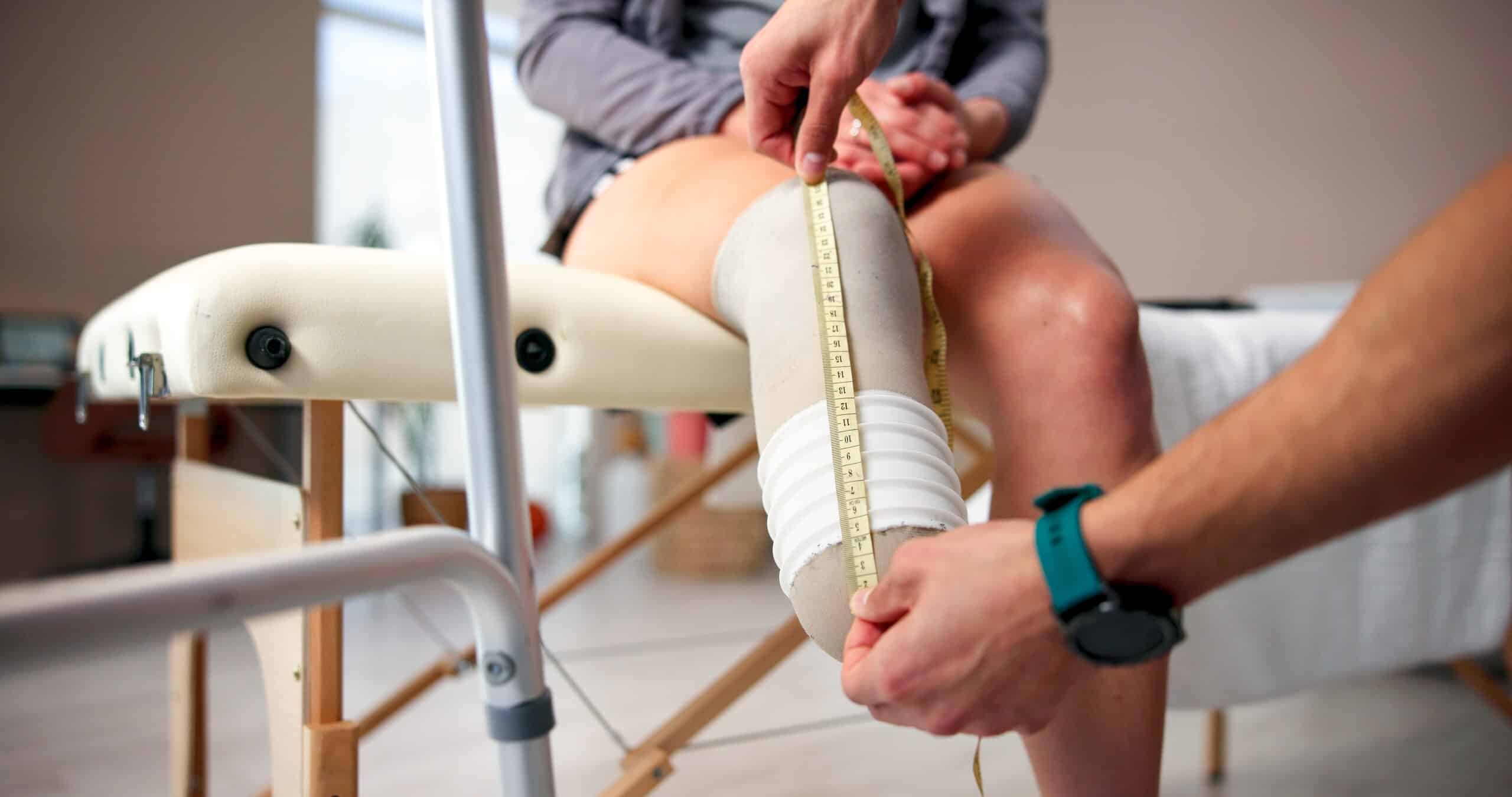
Prosthetics are the part of an amputation claim most often underestimated, and the reason is arithmetic rather than price. A single device is a one-time cost. A lifetime of devices is not.
Prosthetics require replacement on a cycle as components wear and as technology moves, which means a person injured in their thirties will need many of them across a normal lifespan. A settlement built around the first device funds a fraction of what the injury will actually cost.
The device itself is only part of the bill. Ongoing costs include maintenance and repair, therapy that often continues for years, home and vehicle modifications, and counseling.
Projected across a normal life expectancy, those categories together are what make an amputation claim a lifetime claim rather than a treatment claim. Getting them documented before settlement is the difference between a number that lasts and one that runs out.

Who Builds the Financial Picture Behind an Amputation Claim?
No single number captures what an amputation costs over a lifetime, which is why these cases rely on a coordinated team. A certified life care planner projects every future need, from device replacements to ongoing therapy, into a roadmap covering the rest of the client’s life.
A vocational rehabilitation consultant assesses what work remains possible and how that compares to the earning path the person was on before. A forensic economist converts those projections into present-day figures a jury or an insurer can evaluate.
Building the case without that team means putting forward numbers that were estimated rather than documented. That is a difference anyone reviewing the claim will find.
Workplace Amputation: Workers’ Compensation Is Not the Whole Story
Many amputation injuries happen on the job, and workers’ compensation is often the first, and sometimes the only, source of compensation an injured worker considers. Workers’ comp covers medical treatment and a portion of lost wages, but it does not cover pain and suffering, permanent disfigurement, or the full scope of lost earning capacity, and the wage replacement it does provide is capped well below what a person actually earned.
That is where third-party liability claims come in. If a contractor other than the employer, an equipment manufacturer, or a property owner contributed to the injury, a separate claim against that party can recover the full range of damages workers’ comp leaves out.
A worker whose hand was caught in a piece of machinery owned and maintained by a company other than their own employer, for example, may have both a workers’ comp claim and a third-party negligence or products liability claim running at the same time. Sorting out which parties bear responsibility, and pursuing every available avenue rather than settling for workers’ comp alone, is often where the real value of an amputation case gets recovered.
When a Defective Product Causes an Amputation
Pennsylvania allows strict liability claims against the manufacturer of a defective product, a framework the state’s Supreme Court reset in Tincher v. Omega Flex. The practical effect is that an injured person does not have to prove the manufacturer was careless, only that the product was unreasonably dangerous, and Pennsylvania gives the plaintiff a choice of which test to prove that under.
If a power tool’s safety guard failed, or an industrial machine lacked an adequate emergency stop, that defect alone can support a claim against the manufacturer regardless of how careful the company’s design process otherwise was. These cases often run alongside a workers’ compensation claim or a premises liability claim, and identifying every liable party early prevents a case from missing a source of recovery altogether.

Deadlines and Fault: What Every Client Should Know Early
Pennsylvania gives injured people two years from the date of injury to file most negligence claims under 42 Pa.C.S. § 5524. Products liability claims can involve different timing considerations depending on the facts, which is one more reason to speak with an attorney immediately rather than waiting to see how recovery progresses or hoping the deadline sorts itself out later.
Comparative fault is contested in most amputation cases, usually on an argument about improper equipment use or a missed safety procedure. Under Pennsylvania’s modified comparative negligence rule, found in 42 Pa.C.S. § 7102, an injured person found 50 percent or less at fault can still recover damages reduced by that percentage, but recovery is barred entirely at 51 percent or more. We anticipate these arguments and build the evidence to counter them well before an insurance company raises them.
What Can an Amputation Claim Recover?
Depending on the facts of your case, compensation may include medical bills for surgery and hospitalization, the full lifetime cost of prosthetics and replacements, rehabilitation, lost wages and diminished earning capacity, pain and suffering, permanent disfigurement, loss of enjoyment of life, home and vehicle modifications, and psychological treatment tied to the injury.
Why Amputation Victims Choose The Slocum Firm
The Slocum Firm was founded in 2009 and has represented injured Pennsylvanians ever since. We practice from our office in Scranton, Lackawanna County, and our attorneys are admitted to the United States District Court for the Eastern District of Pennsylvania, which covers Philadelphia and the surrounding counties.
The attorney you speak with first stays on the case through every stage and is reachable directly at any hour. The life care planner and the economist build their projections alongside that attorney rather than in parallel with a team that checks in occasionally. Across our practice we have recovered in more than 95 percent of the cases we have taken, and our attorneys bring more than 50 years of combined experience.
Results may vary. Prior case outcomes do not guarantee similar results.
We take amputation cases on contingency, so you pay nothing upfront and owe no attorney fee unless we recover compensation for you. Case expenses are handled separately from the attorney fee, and we will explain exactly how they work before you decide anything. Call The Slocum Firm at (570) 209-7376 at any hour to find out where your claim actually stands.
FAQs: Philadelphia Amputation Injury Lawyer
These are the questions families ask us most often after an amputation injury.
Can I sue for an amputation injury if it happened at work?
Workers’ compensation covers medical costs and partial wages regardless of fault, but it does not cover pain and suffering or full lost earning capacity. If a party other than your employer contributed to the injury, such as an equipment manufacturer or another contractor, a separate third-party claim can pursue those additional damages.
What are prosthetics and future medical costs worth in a Pennsylvania amputation case?
It depends on the type of limb lost and the function needed, and the honest answer is that no one can give you a figure before the projection is built. What drives it is the replacement cycle across a normal lifespan, plus therapy, modifications and care. That work is what turns a guess into a number a claim can be built on.
What if my amputation was caused by defective machinery or a defective product?
Pennsylvania allows strict liability claims against the manufacturer of a defective product, meaning you do not need to prove the manufacturer was negligent, only that the product was unreasonably dangerous. Whether that is shown through consumer expectations or a risk-utility analysis is the plaintiff’s choice.
How long do I have to file an amputation injury lawsuit in Philadelphia?
Generally two years from the date of injury for negligence claims, though products liability timing can vary depending on the facts, so contacting a lawyer immediately protects your options.
What is the difference between traumatic and surgical amputation in a legal case?
A traumatic amputation occurs at the scene of the accident itself, while a surgical amputation happens afterward when a physician determines the limb cannot be saved. Surgical cases often require medical testimony linking the original injury to the amputation decision.
Rebuilding Starts With the Right Legal Team
Call The Slocum Firm at (570) 209-7376 at any hour, whether the injury happened yesterday or several months ago. You will speak directly with an attorney about what your claim would require and what the record currently supports.
There is no attorney fee unless we recover compensation for you, and we will explain how case expenses are handled before you decide anything.