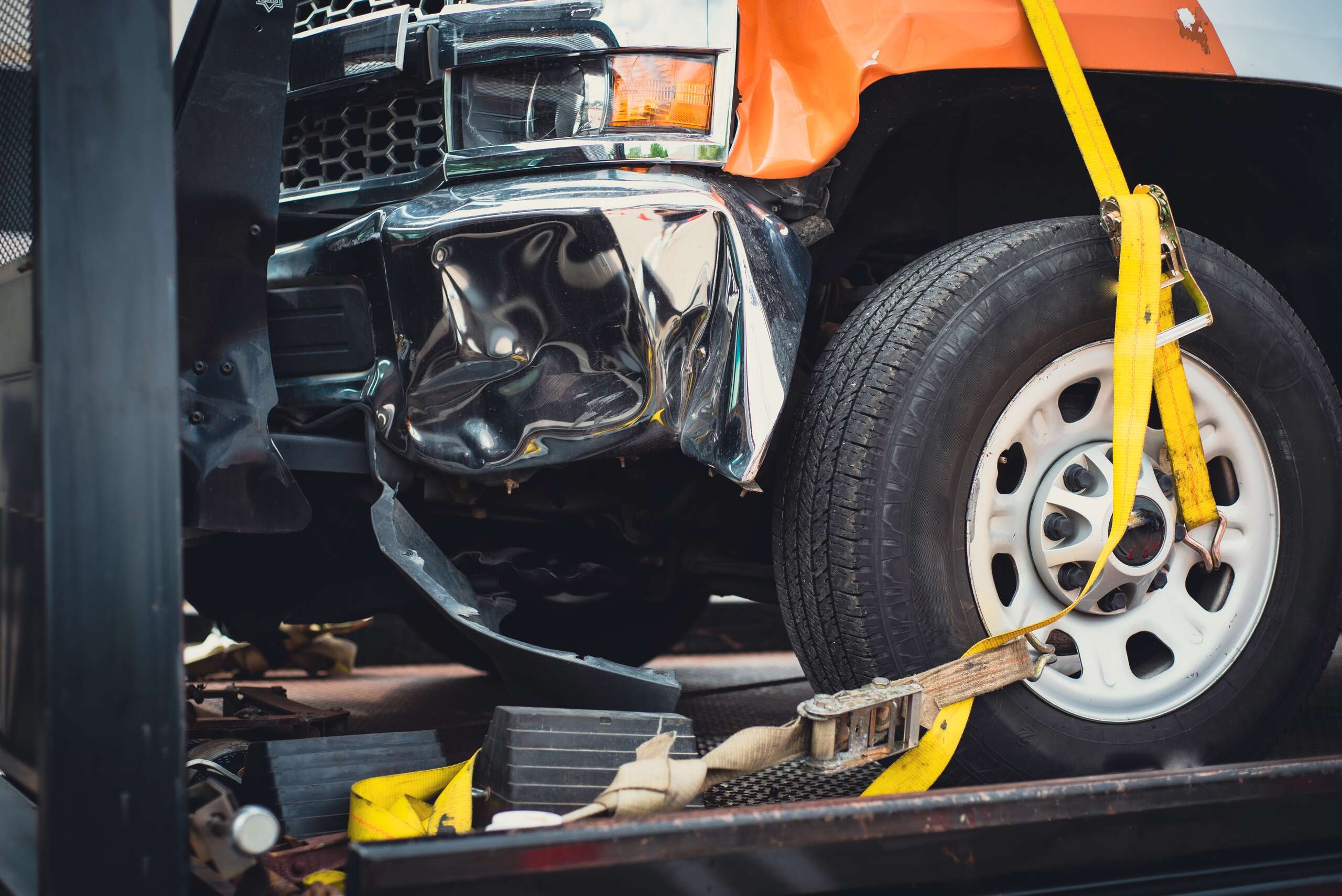
A crash involving a commercial truck can leave you facing a long recovery while a well-funded trucking company and its insurer start building their defense strategy from day one. At The Slocum Firm, our Pennsylvania truck accident lawyers represent people injured by tractor-trailers, delivery trucks, and other commercial vehicles across the state, and we can act quickly to help ensure the evidence that matters is preserved.
Our truck accident attorneys work from our Scranton office, representing clients throughout northeastern Pennsylvania, the Lehigh Valley, and Philadelphia. Truck cases follow many of the same insurance rules as other motor vehicle accident claims, but they also often include federal safety regulations, multiple defendants, and larger insurance policies.
Call us at (570) 209-7376 for a free consultation, 24 hours a day.

What Truck Accident Cases Does The Slocum Firm Handle?
We handle injury and wrongful death claims arising from crashes involving commercial vehicles of all sizes on Pennsylvania roads. If the vehicle was used for business and someone else’s carelessness caused the crash, we can review whether you have a claim. The cases we see include crashes involving:
- Tractor-trailers and semi-trucks on interstates and state highways.
- Box trucks, straight trucks, and delivery vans operating on local routes.
- Tanker trucks and vehicles carrying hazardous materials.
- Dump trucks, cement mixers, and construction vehicles.
- Garbage trucks, tow trucks, and other municipal or service vehicles.
The crash patterns vary as much as the vehicles do, from rear-end impacts by a truck that could not stop in time to underride collisions, jackknifes, rollovers, wide-turn crashes, and spilled cargo. Each pattern points toward different evidence and different responsible parties, which is where a truck case begins to separate from an ordinary car crash.
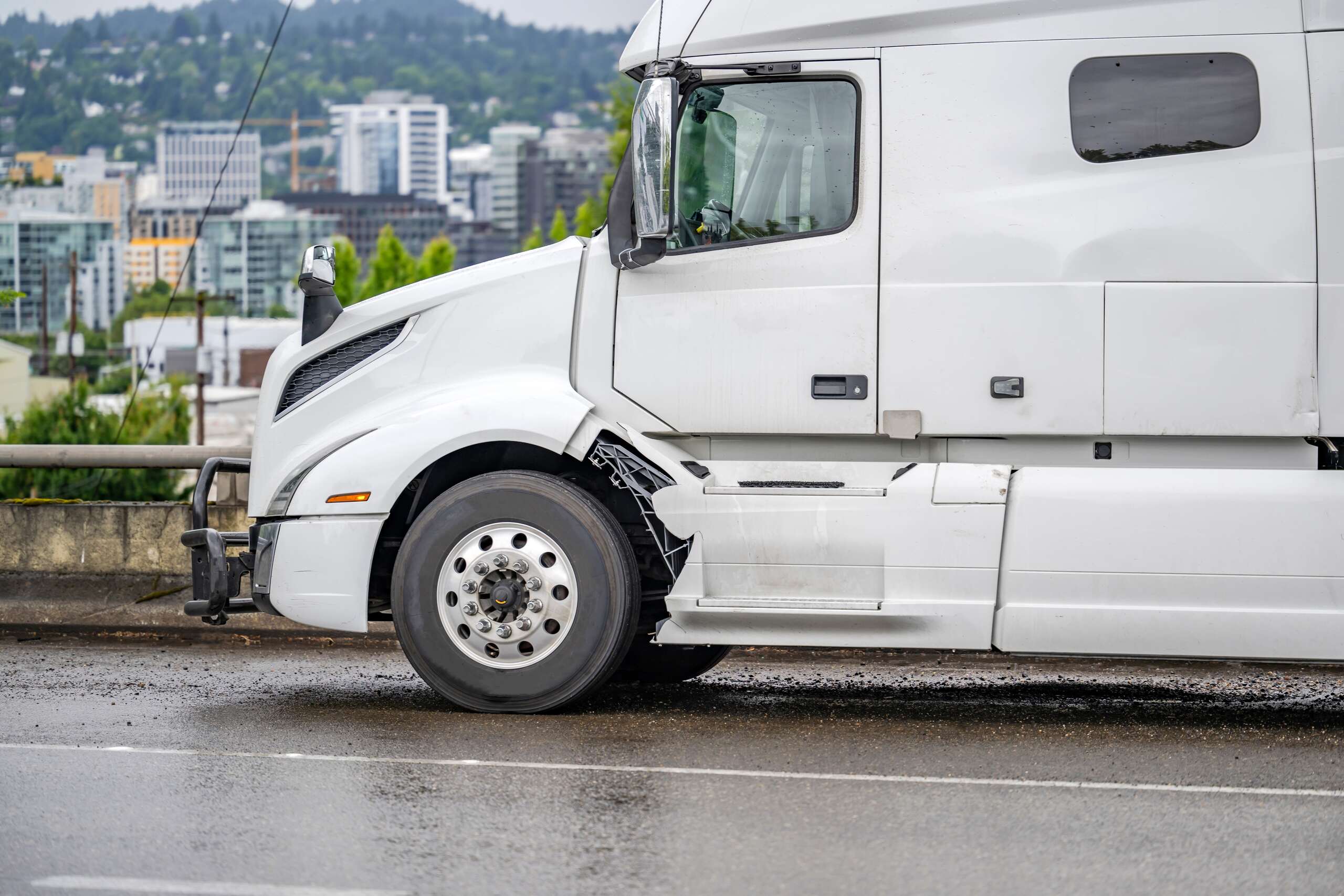
Which Parties Can Share Responsibility for a Truck Crash?
More than one party can be responsible for a single truck crash. The driver is the obvious starting point, but the company that hired the driver, the business that loaded the cargo, and the shop that maintained the truck can each share fault. Identifying all potentially liable parties early matters because Pennsylvania divides responsibility among defendants.
| Potential Defendant | Why They May Be Responsible | Evidence That Often Matters |
|---|---|---|
| Truck driver | Speeding, fatigue, distraction, impairment, or unsafe lane changes | Driving logs, phone records, dash camera video, police report |
| Motor carrier | Negligent hiring, training, supervision, scheduling, or maintenance, and responsibility for its driver’s conduct | Driver qualification file, dispatch records, hours-of-service data |
| Cargo shipper or loader | Overloaded, unbalanced, or poorly secured cargo | Bills of lading, loading records, scale tickets |
| Maintenance or repair company | Faulty brake, tire, or lighting work | Inspection and repair records |
| Vehicle or parts manufacturer | A defective component that failed | The truck itself, recall notices, component testing |
Under 42 Pa.C.S. § 7102, each defendant generally pays its own share of the damages, but a defendant found at least 60% liable can be responsible for the entire award. Your own share of fault also counts: if you are found 51% or more at fault, you cannot recover.
What Happens When the Carrier Calls the Driver an Independent Contractor?
Trucking companies sometimes argue they are not responsible because the driver was an independent contractor or owner-operator. Federal regulations define an employee to include an independent contractor while operating a commercial motor vehicle, which affects how the carrier’s safety duties apply.
We look closely at the lease, the operating authority, and the carrier’s control over the work before accepting the independent contractor defense at face value.

What Safety Rules Must Truck Drivers and Carriers Follow in Pennsylvania?
Interstate trucks must follow the Federal Motor Carrier Safety Administration (FMCSA) regulations, and Pennsylvania applies much of the same framework to trucks operating within the state, so the federal and state rules that govern a truck often overlap. Under 67 Pa. Code § 231.1, the state incorporates, by reference, federal laws, including 49 CFR Parts 382, 385, and 390 through 396, for intrastate commercial vehicles. A violation of these rules can be strong evidence that a driver or carrier acted carelessly.
These are the rules that come up most often in our cases:
- Hours of service: Under FMCSA hours-of-service regulations, a property-carrying driver may drive up to 11 hours within a 14-hour window after 10 consecutive hours off duty and must take a 30-minute break after 8 hours of driving.
- Weekly limits: the same rule bars driving after 60 hours on duty in 7 days or 70 hours in 8 days, depending on the carrier’s schedule.
- Inspection and maintenance: carriers must systematically inspect, repair, and maintain the vehicles they control under 49 CFR § 396.3.
- Cargo securement: cargo must be loaded and secured to prevent it from falling, spilling, or shifting in a way that affects the truck’s stability, in accordance with 49 CFR § 393.100.
- Drug and alcohol testing: carriers must test drivers under 49 CFR Part 382.
Each violation still has to be connected to the crash. Records showing too many hours behind the wheel, skipped inspections, or missed testing often help make that connection.
Why Does Gathering Evidence Quickly Matter in a Truck Case?
The records that prove a trucking violation are held by the carrier, and some of them do not have to be kept for long. Federal rules require carriers to keep drivers’ records of duty status and supporting documents for at least six months under 49 CFR § 395.8. If no one asks the carrier to preserve them, logs, electronic data, and video can be lost.
When we take a truck case, the early work usually follows this order:
- Send a preservation letter to the carrier and its insurer covering logs, electronic logging device data, dispatch records, and video.
- Obtain the police crash report and identify the carrier, the trailer owner, and any broker or shipper involved.
- Document the scene, the vehicles, and your injuries before repairs or salvage change the evidence.
- Request the driver’s qualification file, inspection reports, and maintenance history.
- Work with qualified reconstruction and medical professionals when the facts call for them.
Starting this work in the first weeks gives your claim the strongest foundation, and it puts the trucking company on notice that its records are part of the case.
Does Your Tort Election Limit a Truck Accident Claim?
Pennsylvania’s choice no-fault rules still apply when a truck hits a passenger car, but trucks change how some of them work. Your own auto policy usually pays first-party medical benefits first, and your tort election can affect a claim for pain and suffering. Two exceptions in 75 Pa.C.S. § 1705 come up often in truck cases.
Trucks Registered in Another State
A person bound by limited tort keeps full tort rights when the at-fault driver was operating a vehicle registered in another state. Many tractor-trailers on Pennsylvania highways are registered elsewhere, so the truck’s registration is one of the first things we check.
Injured While Riding in a Commercial Vehicle
A limited tort election also does not restrict a person injured while an occupant of a vehicle other than a private passenger vehicle. If you were riding in a bus, a work van, or another commercial vehicle when a truck struck it, the limited-tort restriction may not apply to your claim.

How Is a Truck Accident Claim Different From a Car Accident Claim?
A truck accident claim usually involves more people, more insurance, and more paperwork than a crash between two passenger cars. Those differences affect how long the claim takes, what it can be worth, and how hard the other side pushes back.
More Insurance and More Adjusters
A carrier may have a primary liability policy, an excess or umbrella policy above it, and separate coverage for the trailer or cargo. Each insurer has its own adjuster and its own interest in limiting what it pays. Sorting out which policy responds first, and in what amount, is part of valuing the claim.
A Faster Response From the Other Side
Trucking companies and their insurers often send investigators to a serious crash quickly. Their goal is to document the facts in a way that benefits the carrier. Having your own team gathering evidence in the same window keeps the record balanced.
Injuries That Take Longer to Treat and Measure
The size and weight of a commercial truck often lead to injuries that require months of treatment before their long-term effects are clear. Settling before that picture is complete can leave future medical care and lost earning ability out of the claim.
How Long Do You Have to File a Truck Accident Lawsuit in Pennsylvania?
Most truck accident lawsuits for injury or wrongful death in Pennsylvania must be filed within two years of the crash under 42 Pa.C.S. § 5524. The deadline can be different for a child injured as a minor, whose two-year period generally begins at age 18. Because building a truck case takes time, waiting until the deadline is close can leave important evidence uncollected.
Claims Involving a Government Truck
If a municipal or state truck caused the crash, a written notice to the government unit is generally required within six months under 42 Pa.C.S. § 5522. Government defendants also raise immunity defenses that private carriers cannot, so these claims need early attention.
Why Choose The Slocum Firm for Your Pennsylvania Truck Accident Claim?
Truck accident claims put you up against carriers and insurers that handle crashes every day. Here is what you can expect when you work with us:
- A firm that has represented injured Pennsylvanians since 2009, with more than 50 years of combined experience among our attorneys.
- Prompt preservation requests to the carrier so key records are not lost.
- A review of every party and policy that may share responsibility.
- Free consultations and no fees unless we win.
- Availability 24 hours a day, 7 days a week, at (570) 209-7376.
Every case turns on its own facts, and we will give you a clear assessment of your case. Call us to talk through your truck crash at no cost.

FAQs About Pennsylvania Truck Accident Cases
How much insurance does a semi truck have to carry in Pennsylvania?
Federal rules set the minimum for interstate for-hire carriers hauling general freight in trucks of 10,001 pounds or more at $750,000 in public liability coverage under 49 CFR § 387.9. Certain hazardous materials require $1 million or $5 million. Many carriers carry more than the minimum, so the actual policy limits are confirmed during the claim.
Can I file a claim if cargo fell off a truck and caused my crash?
Yes, in many cases. Federal cargo securement rules require that trucks be loaded and cargo secured to prevent cargo from falling or spilling onto the road. The driver, the carrier, and the company that loaded the truck may each share responsibility, depending on who loaded and checked the cargo.
Can my family file a wrongful death claim after a fatal truck crash in Pennsylvania?
Yes, Pennsylvania allows a wrongful death action for the benefit of the deceased’s spouse, children, or parents, and permits recovery of medical, funeral, and estate administration expenses, along with other damages. A separate survival action carries forward the claim the person could have brought. Both generally must be filed within two years.
Do I have to report a truck accident to the police in Pennsylvania?
Yes, you must file a police report when the crash involves an injury or death, or when a vehicle is damaged badly enough to require towing. Pennsylvania law requires the driver to notify the nearest police department immediately by the quickest available means under 75 Pa.C.S. § 3746, and the resulting police report often becomes key evidence.
How do I find out which company operated the truck that hit me in Pennsylvania?
Start with the side of the truck. Federal rules require most commercial trucks to display the operating carrier’s name and USDOT number on both sides of the vehicle. If another company’s name appears, the carrier’s name must follow the words “operated by.” The police report and the carrier’s registration records can confirm the rest.
Talk With a Pennsylvania Truck Accident Lawyer at The Slocum Firm to Learn More
A serious truck crash can affect your health, your work, and your family for a long time. The team at The Slocum Firm helps injured people across Pennsylvania identify all responsible parties, preserve evidence, and pursue fair compensation.
Call (570) 209-7376 anytime, or reach us through our contact form to schedule a free consultation. You pay no fees unless we win.