A driver who rear-ends you while glancing down at a phone for just a moment rarely admits to it afterward, even when the evidence makes it obvious to everyone else at the scene. The police report might say nothing more than “driver inattentive,” and the driver’s insurance company will happily let that vague description stand if nobody pushes for the actual phone records.
Proving distraction isn’t usually about a dramatic confession at the scene. It’s about pulling the right records before they disappear. If a distracted driver hits you anywhere in Pennsylvania, a distracted driving accident attorney at The Slocum Firm knows exactly which records to request and how fast to move.
Call or text (570) 209-7376 any hour of the day for a free case review and speak directly with an attorney, not a call center. You pay no fee unless we recover for you.
Pennsylvania’s Texting Ban and Its Real Limits
Pennsylvania law specifically prohibits using an interactive wireless communications device to send, read, or write a text-based communication while driving. This statute, found in Title 75 of the Pennsylvania Vehicle Code, covers texting, emailing, and instant messaging directly.
However, under Paul Miller’s Law, Pennsylvania now strictly prohibits all handheld mobile device operations, making it fully illegal to scroll social media feed channels, manually adjust map settings, or talk without a hands-free setup.
This gap matters in a personal injury case. A driver might not have violated the specific texting statute and still have been dangerously distracted under general negligence principles, which require every driver to operate a vehicle with reasonable care, no matter what device was involved.
A driver scrolling a phone at a red light who fails to notice that traffic has started moving again can still be liable for negligence, even when that conduct falls outside the narrow texting statute.
What Actually Counts as Distracted Driving
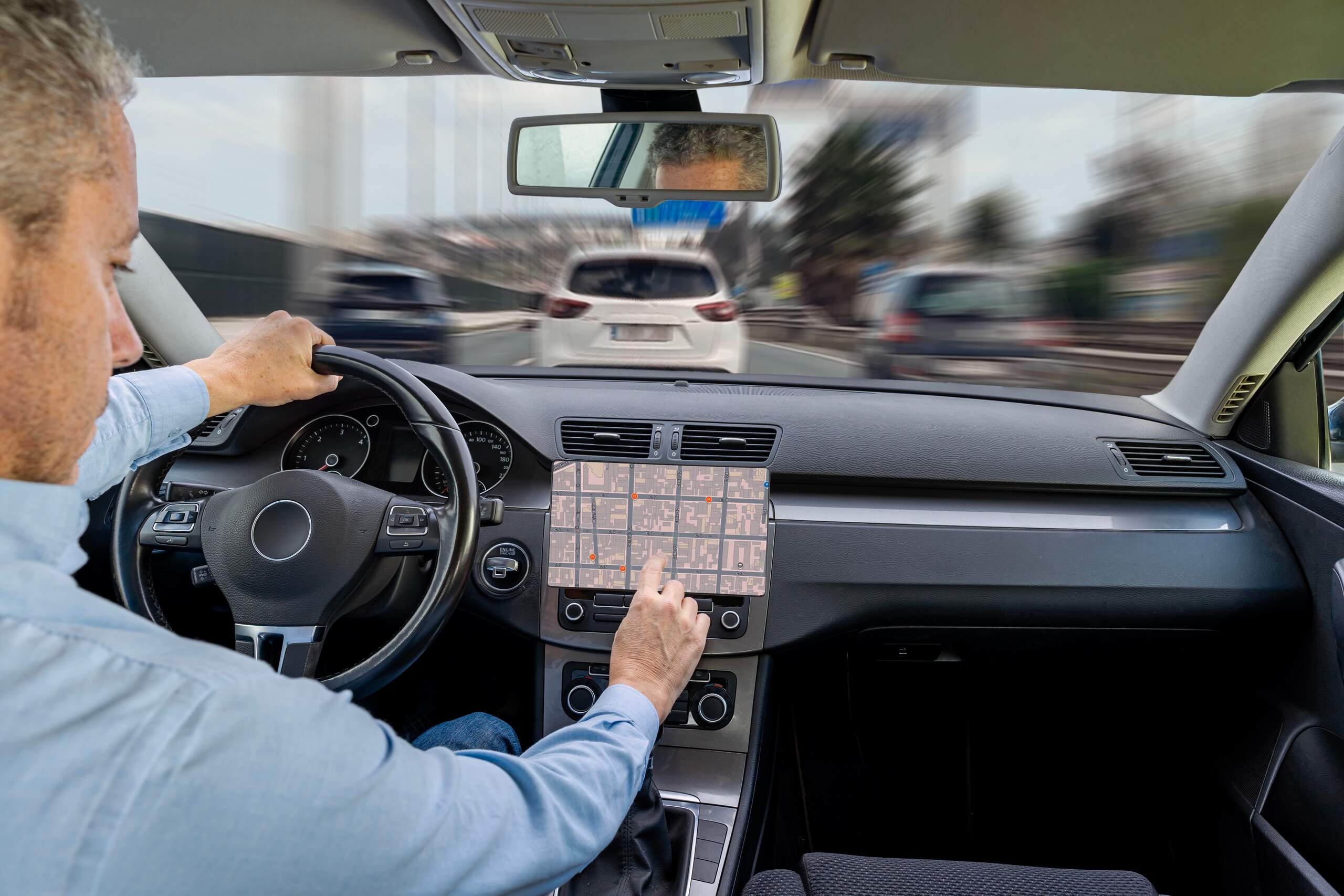
Distraction extends well beyond phone use. Eating, adjusting a navigation system, reaching for something in the back seat, applying makeup, or managing a dog in the front seat all qualify as distracted driving under Pennsylvania’s general negligence standard. Commercial GPS units, in-dash entertainment systems, and even conversations with passengers can pull a driver’s attention away from the road long enough to cause a serious collision.
In contrast to what many people assume, distraction doesn’t require proof that a driver was looking at their phone for several seconds. Pennsylvania law focuses on whether the driver failed to exercise reasonable care given the circumstances, which means even a brief lapse in attention at highway speed can support a negligence claim if it caused your crash.
How Our Attorneys Prove Distraction Happened
Proving distracted driving often requires acting quickly to preserve critical evidence before it is lost. Cell phone records can reveal whether a driver was calling, texting, or using data around the time of the crash, but carriers retain detailed records for only a limited period.
Our attorneys promptly send preservation requests and, when necessary, obtain subpoenas to secure this evidence. We also investigate vehicle event data recorders, which capture speed, braking, and steering input in the moments before impact and may show the driver never attempted to avoid the collision.
Dash cam footage, traffic cameras, and nearby business surveillance can further strengthen a claim by documenting the crash or the driver’s actions beforehand. Witnesses may also provide valuable testimony about a driver’s behavior, such as looking down instead of watching the road.
Because surveillance footage is often overwritten and witness memories fade quickly, our attorneys begin collecting evidence immediately to build the strongest possible distracted driving case.

The Insurance Company’s Playbook for Distraction Claims
Insurance adjusters know that proving phone-related distraction takes real investigative work, and many count on injured drivers not pursuing it. A common tactic involves offering a quick settlement before an injured driver’s attorney has time to request phone records, hoping to close the claim before the strongest evidence ever surfaces.
Adjusters also frequently argue that even if a driver was using a phone, the distraction wasn’t the actual cause of the crash, pointing instead to road conditions, weather, or your own driving as the real contributing factor.
Pennsylvania’s modified comparative negligence rule carries a 51 percent bar, so an insurer has a financial incentive to shift blame toward you. A finding of 51 percent or greater fault on your part bars recovery entirely, and any lesser percentage still reduces what you can recover.
Time is ticking after a crash—learn how legal deadlines affect your right to compensation by reading our guide on the statute of limitations for personal injury in Pennsylvania.
Rear-End Collisions and the Distraction Pattern
Distracted driving frequently shows up in rear-end collisions, and 75 Pa. Cons. Stat. Section 3310 requires drivers to maintain a safe following distance so they can stop when traffic ahead slows or stops.
Pennsylvania doesn’t apply an automatic presumption of fault for rear-end crashes the way some states do. Even so, juries and adjusters tend to view a rear-end impact with no skid marks or braking evidence as strong circumstantial proof that the trailing driver wasn’t paying attention.
This pattern becomes especially important in multi-vehicle pileups, where a distracted driver in the rear can trigger a chain-reaction collision involving several vehicles. Sorting out how much each impact contributed to your specific injuries often requires accident reconstruction analysis, particularly when insurance companies for different drivers each try to minimize their own client’s share of responsibility.
Commercial Drivers Face Stricter Distraction Rules
Commercial truck drivers must follow strict federal safety rules that prohibit texting and handheld phone use while driving. When a distracted truck driver causes a crash, investigators may have access to additional evidence, including electronic logging device data, dispatch communications, company phone policies, and employment records.
Our attorneys move quickly to preserve this evidence before it is lost. Because trucking companies typically carry much higher insurance limits than individual drivers, their insurers often respond aggressively, deploying investigators and accident reconstruction specialists immediately after a crash. Early legal action helps level the playing field, preserve critical evidence, and strengthen your opportunity to recover full compensation for your injuries.
Motorcyclists and Pedestrians Face Heightened Risk
Distracted drivers pose a particular danger to motorcyclists and pedestrians, who are far less visible to a driver glancing away from the road than another car would be.
A driver checking a text for even a second or two can miss a motorcyclist in a blind spot or a pedestrian stepping into a crosswalk. With far less protection than someone inside a vehicle, these road users tend to suffer more serious injuries.
These cases sometimes face an additional hurdle, since insurance adjusters occasionally try to argue a motorcyclist or pedestrian should have done more to avoid the collision themselves, even when the driver’s distraction left them no real opportunity to react.
Pennsylvania’s comparative negligence rules apply here, too, which makes building a clear record of the driver’s distraction even more important to counter these arguments effectively before an adjuster has a chance to shift blame onto someone who had little control over what happened.

When the Distracted Driver Doesn’t Have Enough Insurance
Pennsylvania requires minimum liability coverage that often falls well short of covering serious injuries, especially when a distracted driver causes a high-speed rear-end collision or a multi-vehicle pileup.
If the at-fault driver’s policy limits don’t cover your medical bills, lost wages, and ongoing care needs, your own underinsured motorist coverage may fill that gap, provided you purchased it or it applies through a household policy.
Many Pennsylvania drivers don’t realize they carry underinsured motorist coverage until an attorney reviews their policy, since it often sits unused before a serious crash makes it relevant. Pursuing this coverage has its own negotiation process, sometimes adversarial, since you’re now making a claim against your own insurer rather than someone else’s.
Our attorneys handle this the same way we handle any other distracted driving claim, building the same documentation of fault and damages regardless of which policy ultimately pays.
How Settlement Negotiations Typically Unfold
Once liability is clearly established through phone records, witness statements, or event data recorder information, negotiations usually begin with a demand package outlining medical treatment, lost income, and the long-term impact of your injuries. Insurance companies rarely offer full value with their first response, often countering with a number well below what the documented evidence supports.
Strong distraction evidence tends to shorten this back-and-forth considerably. An insurer facing clear proof that its driver was texting at the moment of impact has little incentive to risk a trial where a jury sees that evidence.
Cases that rely instead on circumstantial factors, like a rear-end impact pattern, sometimes take longer to resolve. They may require more aggressive negotiation or, in some cases, litigation to reach a fair outcome.
Documenting Your Crash to Support a Distraction Claim
After a distracted driving crash, take photos of the vehicles, the scene, and any visible phone or device if it can be done safely. Collect contact information from witnesses before they leave, and write down any comments the other driver makes about phone use.
Obtain and review the police report for evidence of distraction, and avoid discussing the crash on social media. In Pennsylvania, you generally have two years to file a personal injury lawsuit, but key evidence such as phone records, surveillance footage, and witness memories can disappear much sooner, making prompt legal action important.

Frequently Asked Questions
What if the other driver denies using their phone at the time of the crash?
Phone records subpoenaed directly from the carrier don’t depend on what a driver admits to. Our attorneys pursue this documentation independently of any statement the at-fault driver makes to police or their own insurance company.
Can I still have a case if the police report doesn’t mention distraction at all?
Yes. Officers often don’t have access to phone records at the scene, so a report’s silence on distraction doesn’t mean it didn’t happen, only that the investigating officer didn’t have that evidence available at the time.
Does it matter if I was also looking at my phone when the crash happened?
It can factor into comparative negligence, but only if your own phone use actually contributed to causing the crash. Being stopped at a red light while another driver rear-ends you generally doesn’t create that kind of shared fault.
How quickly do phone records actually get deleted by carriers?
Retention policies vary by carrier, which is exactly why prompt legal involvement matters. Waiting weeks or months to request these records risks losing access to data that might otherwise have clearly proven the other driver’s distraction.
What if the distracted driver was working for a company at the time of the crash?
Their employer may share liability depending on whether the driver was acting within the scope of their job duties, which can open up an additional source of insurance coverage beyond the driver’s personal policy.
Is texting while stopped at a red light still illegal in Pennsylvania?
Yes. Pennsylvania’s texting ban applies any time a vehicle is in motion, including momentary stops in traffic, not just while actively driving down the road.
Working With The Slocum Firm on Your Claim
Our attorneys have handled distracted driving cases across Pennsylvania, from rear-end collisions caused by a glance at a text to serious commercial vehicle crashes involving distracted truck drivers. Our track record includes a recovery rate above 95 percent, with most cases resolved in under a year. Results may vary. Prior case outcomes do not guarantee similar results.
You can call or text one of our lawyers directly, at any hour of the day, instead of waiting on a case manager you have never spoken with.
We take distracted driving cases on contingency, so you owe nothing upfront and nothing at all unless we recover compensation on your behalf.
With over 50 years of combined experience, we know which records to request, how quickly to request them, and how insurance companies try to avoid paying claims involving a driver who simply wasn’t watching the road when it mattered most.
Call (570) 209-7376 right now to speak directly with a Pennsylvania distracted driving lawyer about your situation. Consultations are always free, available any time of day by phone or text, and our bilingual staff can walk Spanish-speaking callers through every step in their preferred language.