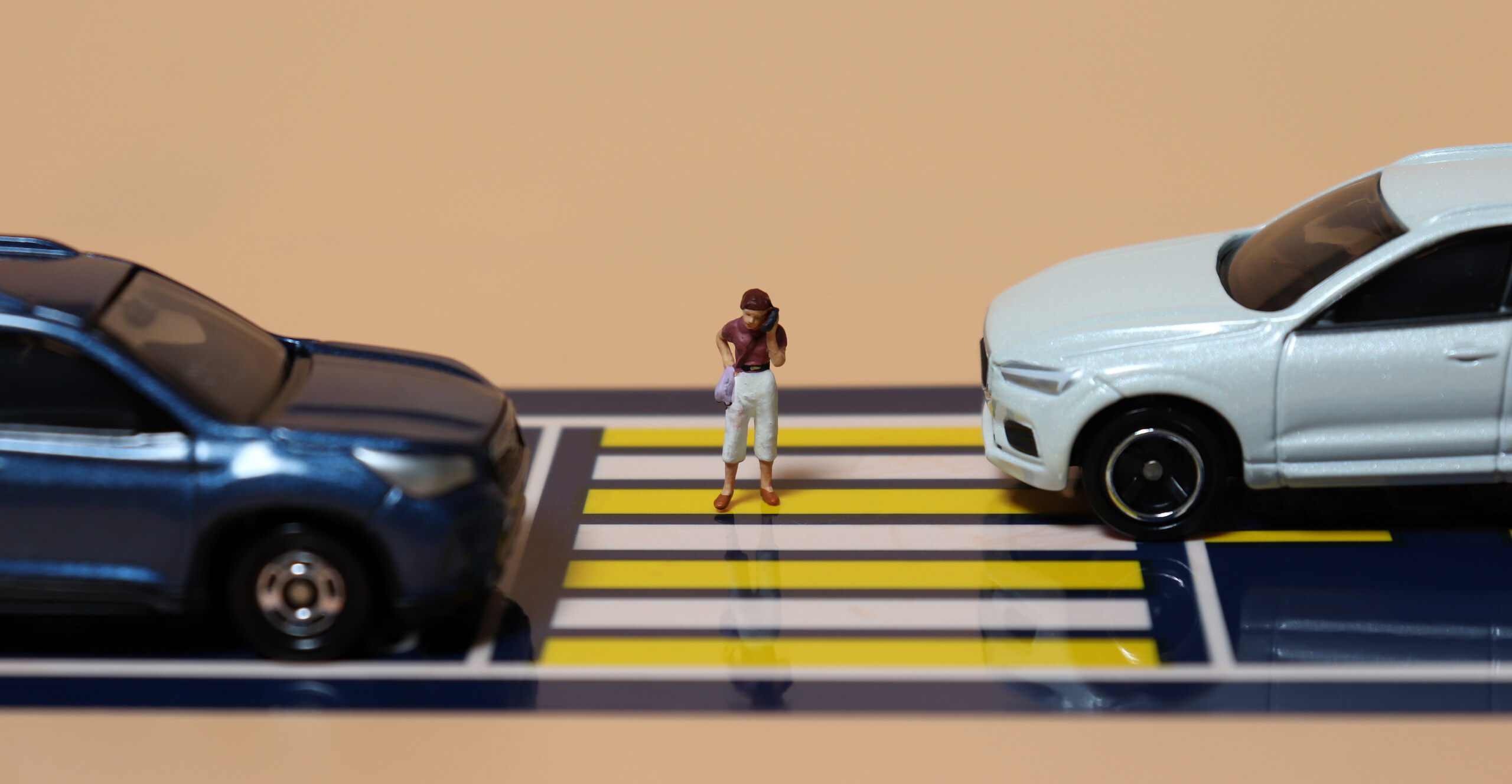
If you were hit by a car while walking in Pennsylvania, your own auto insurance typically pays your medical bills first, even though you weren’t driving at the time and probably did nothing wrong.
That feels backwards to many injured pedestrians. But after being hit by a vehicle, you need to understand how your own car insurance affects your pedestrian accident case and what to expect from the legal process that follows.
For example, maybe you’re crossing the street near Lackawanna Avenue or walking past the University of Scranton, and the next thing you know, you’re dealing with ambulance bills, ER treatment, and time away from work. Did you know that the first step is to file a claim with your own insurance company instead of the driver who hit you?
This is not a mistake. It’s how Pennsylvania law is structured. Understanding the priority of insurance benefits in Pennsylvania can help you avoid billing delays, denied claims, and unnecessary financial stress while you’re trying to heal.
Key Takeaways About Pedestrian Accident Insurance in Pennsylvania
- Pennsylvania follows a no-fault system for medical benefits, meaning your own auto insurance (PIP) usually pays first, even if you were injured as a pedestrian.
- The priority of benefits under Pennsylvania law requires you to look to your own policy before the driver’s insurance.
- If you don’t have a PIP policy, coverage may come from a resident relative’s policy or, ultimately, the driver’s insurance.
- PIP coverage for pedestrians typically includes emergency care, hospital treatment, and follow-up medical expenses.
- Health insurance is usually secondary coverage after available auto insurance medical benefits are exhausted.
- Misunderstanding the priority rule can lead to delayed payments or debt collection notices, even when coverage is in place.
- Pennsylvania law governing these rules comes from the Motor Vehicle Financial Responsibility Law (MVFRL), including Section 1713.
Why You Have to Use Your Own Insurance as a Pedestrian
Many injured pedestrians ask the same question: “Why do I have to use my own insurance if I was hit by a car while walking?”
The answer lies in Pennsylvania’s no-fault insurance system. Under this system, medical bills are paid through Personal Injury Protection (PIP) benefits, also known as first-party benefits, regardless of who was at fault for the accident.
This means your medical expenses are covered by the insurance policy that applies to you, not necessarily the person who caused the accident.
Even though the driver may ultimately be found responsible for the crash, Pennsylvania law prioritizes prompt access to medical coverage over fault determination at the outset. Your own insurance is expected to step in immediately so you can receive necessary medical treatment without delay.
Understanding the Priority of Benefits in Pennsylvania
Pennsylvania’s concept of priority of benefits determines which insurance policy pays first. This hierarchy is set by law and applies to pedestrians as well as to drivers and passengers.
First Priority: Your Own Auto Insurance Policy
If you own a vehicle and carry auto insurance in Pennsylvania, your policy is the first source of medical benefits, even if you were walking at the time of the accident.
Your PIP policy coverage applies regardless of:
- Who caused the accident
- Where the accident occurred
- Whether you were crossing legally or standing on a sidewalk
Your insurer is responsible for paying your medical bills up to your policy’s PIP limits.
Second Priority: A Resident Relative’s PolicySecond Priority: A Resident Relative’s Policy
If you do not own a vehicle, the next level of coverage comes from a resident relative. This could include a spouse, parent, or other household member who has an auto insurance policy. To qualify, you must live in the same household as the insured.
Third Priority: The Driver’s Insurance Policy
If neither of the first two options applies, or if benefits are exhausted under the prior policy, the driver’s insurance becomes responsible for your medical expenses. This is often the biggest surprise for pedestrians. Even though the driver caused the accident, their insurance is not always the first to pay your medical bills.
What Is PIP Coverage for Pedestrians?
PIP coverage is not limited to drivers. In Pennsylvania, it also applies to pedestrians who are injured in motor vehicle accidents. This coverage typically includes:
- Ambulance transportation
- Emergency room treatment
- Hospital stays
- Surgery
- Diagnostic testing such as X-rays, CT scans, and MRIs
- Physical therapy and rehabilitation
Every Pennsylvania auto policy must include at least $5,000 in medical benefits, though many policies carry higher limits. If your injuries are serious, medical expenses can quickly exceed that minimum coverage, which is why understanding how additional coverage works is important.
What Happens If You Don’t Have Car Insurance?
If you don’t own a vehicle and don’t live with someone who has auto insurance, then the at-fault driver’s policy becomes the primary source of medical benefits. In a pedestrian accident, this means the responsible driver’s insurance will typically cover your medical expenses first.
If no applicable insurance is available, you may be eligible for coverage through the Pennsylvania Financial Responsibility Assigned Claims Plan, which provides limited benefits in certain situations.
How Health Insurance Fits Into the Picture
Health insurance often becomes involved, but usually not right away. In most cases:
- Your auto insurance pays medical bills first.
- Once your PIP benefits are exhausted, your health insurance may begin covering additional treatment.
- Your health insurer may later seek reimbursement from any settlement you receive.
Hospitals and medical providers are familiar with this process and often request auto insurance information when treating accident-related injuries. Providing the correct information early can help prevent billing delays.
Why the System Feels Counterintuitive
From a common-sense perspective, it seems logical that the driver who hit you should immediately pay for your medical care. Pennsylvania’s system takes a different approach.
The goal is to ensure that injured individuals receive prompt medical treatment without waiting for liability investigations or insurance company disputes. By requiring your insurer to pay first, the system avoids treatment and payment delays, but it also creates confusion for those unfamiliar with the rules.
How Fault Still Matters in a Pedestrian Accident Case
Although medical benefits are paid without regard to fault, fault still plays a major role in your overall case. Pennsylvania follows a modified comparative negligence rule, which means:
- Your compensation can be reduced if you share some responsibility for the accident.
- If you are found more than 50% at fault, you cannot recover damages.
For pedestrians, questions of fault may arise when the injured pedestrian was crossing outside a marked crosswalk, failed to obey traffic signals, or was walking while distracted. However, drivers are expected to exercise caution and remain alert, especially in areas with heavy foot traffic such as downtown Scranton, near Steamtown Mall, or around the University of Scranton.
What Compensation Is Available Beyond Medical Bills?
PIP coverage is only the first layer of financial protection. It covers medical expenses, but it does not fully compensate you for everything you’ve lost. Depending on your situation, you may also be able to pursue compensation for:
- Lost wages
- Reduced earning capacity
- Pain and suffering (depending on the applicable law)
- Emotional distress
- Long-term care needs
These claims are typically not covered by PIP, so they must be made against the at-fault driver’s liability insurance.
What is Limited Tort vs. Full Tort in Pennsylvania Pedestrian Cases?
If you own auto insurance in Pennsylvania, your policy includes a tort election: limited tort or full tort. This choice affects your ability to recover non-economic damages.
Limited tort coverage restricts your ability to seek compensation for pain and suffering unless you meet the threshold for a “serious injury.” Full tort coverage allows you to pursue these damages without restriction.
Even as a pedestrian, your tort election can affect your case, as your policy still plays a role in how benefits are handled. To learn more, contact an experienced Pennsylvania pedestrian accident lawyer for a free consultation.
Common Mistakes Pedestrians Make After an Accident
Confusion about insurance coverage often leads to avoidable problems. Some of the most common mistakes people make after a pedestrian accident include failing to notify their own auto insurer, assuming the driver’s insurance will automatically cover everything, or providing only health insurance information to medical providers.
These missteps can delay payments and increase the risk of receiving bills or debt collection notices from providers. Taking the correct steps early can make a significant difference in how smoothly your case progresses.
Why Understanding the Priority Rule Protects You
Knowing how the system works helps you avoid unnecessary stress during an already difficult time. When you understand the priority of benefits in Pennsylvania, you can:
- Ensure your medical bills are paid promptly
- Avoid claim denials and delays
- Prevent collections issues
- Focus on recovery instead of insurance disputes
Insurance companies follow strict rules. If you don’t follow the same rules, even unintentionally, it can create complications that are entirely avoidable.

When Injuries Are Severe or Life-Changing
Pedestrian accidents often result in serious injuries because there is no physical protection between you and the vehicle. In more severe cases, injuries may include:
- Traumatic brain injuries
- Spinal cord damage
- Multiple fractures
- Internal organ damage
These cases often involve long-term medical care, rehabilitation, and significant financial losses. While PIP coverage provides an initial layer of protection, it is rarely enough to cover the full impact of a catastrophic injury.
In these situations, pursuing additional compensation from the responsible driver becomes critical. A dedicated personal injury law firm can help protect your rights and fight for the compensation you deserve.
Frequently Asked Questions About Car Insurance Coverage After a Pedestrian Accident
Does it matter if I was in a crosswalk when I was hit?
Being in a crosswalk can strengthen your case, but it does not change the priority of medical benefits. Your own auto insurance still pays first if you have coverage. However, the driver’s liability for the accident may be clearer if you were lawfully crossing.
What if the driver who hit me doesn’t have insurance?
If the driver is uninsured, you may still have options through your own uninsured motorist (UM) coverage. This can provide compensation beyond medical benefits, depending on your policy.
Can I increase my PIP coverage for better protection?
Yes. Pennsylvania drivers can choose higher medical benefits limits when purchasing auto insurance. Increasing your coverage can provide additional protection if you are injured as a driver, passenger, or pedestrian.
Will my insurance company try to recover money from the at-fault driver?
Probably. This process is called subrogation. Your insurer may seek reimbursement from the at-fault driver’s insurance after paying your medical bills.
What happens if my injuries take months or years to treat?
As long as your treatment is related to the accident and properly documented, your accident claim can include future medical expenses. Long-term cases often require coordination between multiple insurance sources and legal claims.
Talk to a Skilled Pennsylvania Pedestrian Accident Attorney at The Slocum Firm to Learn More
Being hit by a car while walking can turn your life upside down in seconds. The last thing you should have to deal with is confusion over who pays your medical bills or whether your treatment will be covered.
If you were injured as a pedestrian in Scranton or anywhere in Pennsylvania, call the team at The Slocum Firm to speak with a pedestrian accident attorney about your case. We are available 24/7, and you will never pay a fee unless we recover compensation for you.
Since 2009, our attorneys have recovered millions for injured clients and maintain a 95% recovery rate, with most cases resolved in less than a year. When you call, you’ll speak directly with an attorney who can explain your rights, guide you through the insurance process, and help you pursue the compensation you deserve.
You shouldn’t have to navigate Pennsylvania’s complex insurance rules alone. Call (570) 209-7376 now for a free consultation and get the answers you need to protect your future.