Quick Answer
In most cases, the property owner next to the sidewalk—not the City—is responsible for injuries caused by dangerous sidewalk conditions in Scranton. Under Pennsylvania law, abutting property owner liability usually applies first. The City of Scranton may only be responsible if it had prior written notice of the defect.
You’re walking along Wyoming Avenue or near the University of Scranton when your foot catches on a broken slab of concrete. In an instant, you fall, and now you’re dealing with injuries, medical bills, and uncertainty about who is responsible. One of the first questions people ask is: “Is the homeowner or the city responsible for broken sidewalks?”
The answer in Scranton is not always intuitive. While many people assume the City is responsible for maintaining sidewalks, Pennsylvania law—and local ordinances—often place that duty on the abutting property owner. At the same time, the City may still have a role in certain situations.
Let’s review how liability is sorted in these cases to help you make the best decisions and avoid delays when pursuing a claim after a sidewalk accident in Scranton.
Key Takeaways About Sidewalk Liability in Scranton
- In Scranton, the abutting property owner is usually primarily responsible for sidewalk maintenance.
- Property owners may be liable for legal damages if they fail to repair dangerous conditions.
- The City of Scranton may have secondary liability if it had prior written notice of the defect.
- Municipal immunity laws limit when you can sue the City.
- Identifying the correct party early can help avoid delays in your claim.
- These cases involve both state law and local Scranton rules.
Who Is Responsible for Sidewalk Maintenance in Scranton?
In Scranton, sidewalks are generally considered the responsibility of the property owner whose land borders the sidewalk. Under PA laws, this is known as abutting property owner liability. Under local ordinances, property owners are expected to maintain sidewalks in a safe condition, which includes repairing cracks, uneven surfaces, and other hazards.
This means that if you are injured by a dangerous sidewalk condition, the property owner is often the first party to consider in determining liability.
What Does “Abutting Property Owner Liability” Mean?
Abutting property owner liability refers to the legal responsibility of a property owner to maintain the sidewalk directly adjacent to their property. This responsibility typically includes:
- Repairing damaged or uneven concrete
- Addressing hazards like holes or loose materials
- Maintaining safe conditions for pedestrians
If a property owner fails to meet these obligations and someone is injured as a result, the property owner may be held liable for negligence.
Why the City Is Not Usually the Primary Defendant
Many people assume that the City of Scranton is responsible for sidewalk conditions because sidewalks are part of public walkways. However, in Pennsylvania, municipalities often shift maintenance responsibility to property owners through local ordinances.
This means the City is not typically the primary party responsible for repairs. Like most laws and regulations, there are some exceptions that might apply to your circumstances.
When Can the City of Scranton Be Held Responsible for Injuries Sustained in a Sidewalk Accident?
Although the property owner is usually the primary responsible party, the City may still be held secondarily liable in some cases. This generally depends on whether the City had prior written notice of the dangerous condition and failed to address it.
For example, if someone reported a hazardous sidewalk to the City and it was not repaired within a reasonable time, the City may share responsibility for resulting injuries. Proving this type of notice can be challenging.
Understanding Municipal Immunity in Sidewalk Cases
Pennsylvania law provides municipalities with certain protections known as governmental immunity. This means that you cannot sue a city for every type of injury. Instead, there are limited exceptions where a municipality can be held liable.
Sidewalk defects may fall within one of these exceptions, but only if specific conditions are met, including proper notice of the accident and proof of city negligence. This is why cases involving municipal immunity for sidewalks can be more complex than typical injury claims.
Contact a dedicated Scranton premises liability lawyer for a free consultation and learn whether you may be eligible to bring legal action against the City as well as the property owner.
What Is Required to Sue the City of Scranton for a Fall?
If you are considering suing the City of Scranton for a fall, you must typically show:
- The sidewalk condition was dangerous
- The City had prior written notice of the defect
- The City failed to repair the issue within a reasonable time
- The condition directly caused your injuries
Without evidence of prior notice of the defect, it may be difficult to hold the City responsible.
How Local Ordinances Affect Your Case
Scranton’s local property maintenance laws play an important role in determining liability. These ordinances often require property owners to maintain sidewalks and may establish penalties for failing to do so. In some cases, a violation of a local ordinance can support a negligence claim.
This concept is sometimes referred to as negligence per se, in which proof of violating a safety law helps establish liability.
Common Causes of Sidewalk Injuries in Scranton
Sidewalk accidents can happen for a variety of reasons, many of which are preventable with proper maintenance and regular inspection. In a city like Scranton, where seasonal weather and older infrastructure play a role, certain hazards appear more frequently than others.
Some of the most common causes include:
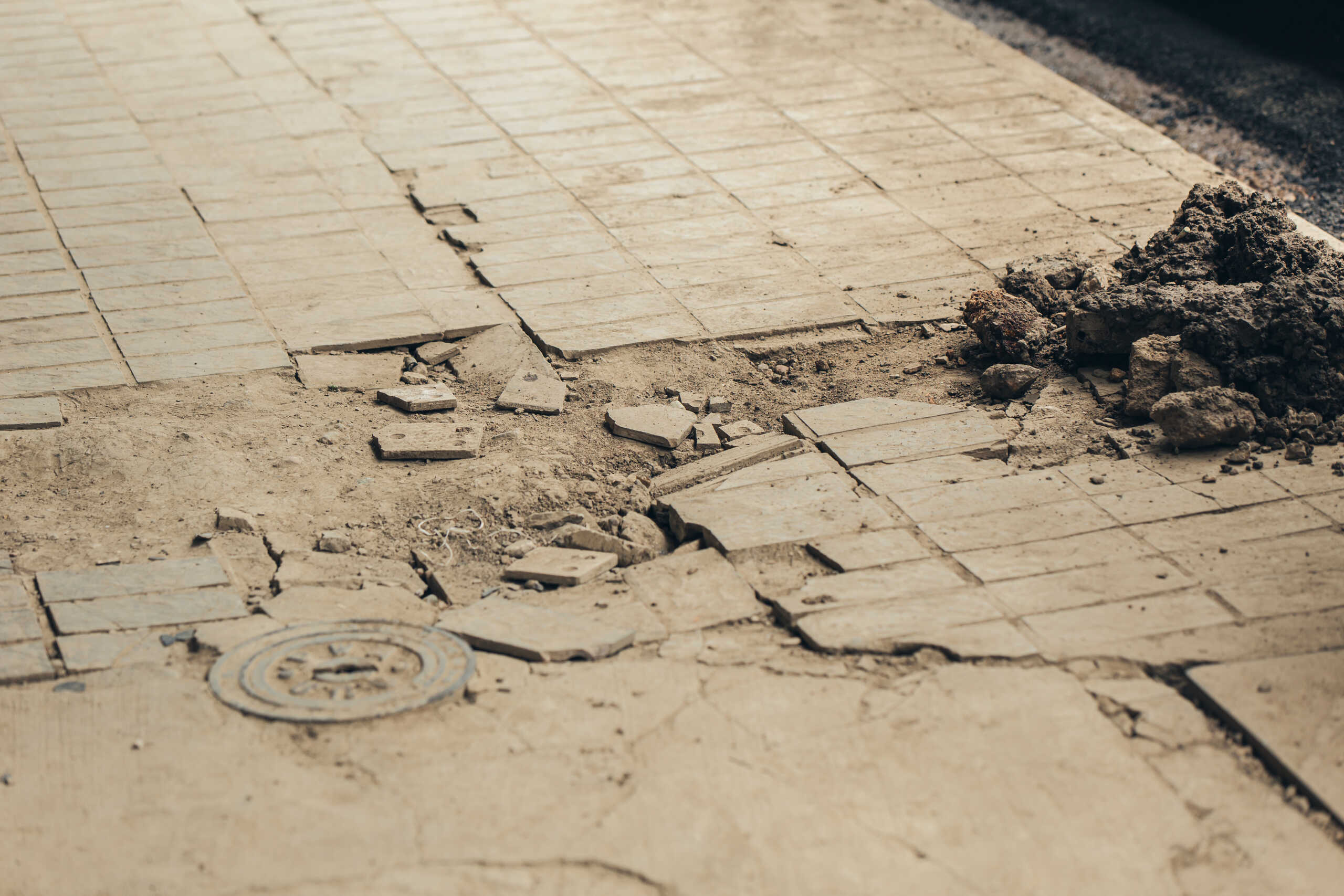
- Cracked or uneven pavement that creates tripping hazards
- Tree root damage that lifts or shifts sections of concrete over time
- Ice or snow that was not properly cleared within a reasonable timeframe
- Loose, broken, or deteriorating sidewalk sections
While these conditions may seem minor at first glance, even small height differences or surface irregularities can cause serious falls, especially for older adults or individuals carrying bags or walking in low-light conditions.
In addition to physical defects, environmental and location-based factors can increase the risk of injury. Areas with heavy foot traffic—such as downtown Scranton, near Steamtown Mall, along Lackawanna Avenue, or around the University of Scranton—often see more wear and tear. When sidewalks in these areas are not regularly maintained, the likelihood of injury increases significantly.
Seasonal changes also play a role. Freeze-thaw cycles during Pennsylvania winters can cause concrete to expand and contract, leading to cracks and uneven surfaces. Property owners are expected to monitor these conditions and address them before they become dangerous.
What If Multiple Parties Share Responsibility?
In some cases, more than one party may share responsibility for a sidewalk injury. For example, the abutting property owner is typically responsible for maintaining the sidewalk. However, the City of Scranton may still have secondary liability. In addition, other parties—such as contractors or property managers—may be involved if they performed work that contributed to the hazardous condition.
Pennsylvania follows a comparative negligence rule, meaning that liability can be apportioned among multiple parties. If more than one party contributed to the dangerous condition, each may be assigned a percentage of fault based on their role in the incident.
In some situations, the injured person’s own actions may also be considered. For example, if someone was distracted or not paying attention, that could affect how fault is allocated.
Being partially at fault does not automatically prevent recovery—it may simply reduce the amount of compensation based on the assigned percentage of responsibility. However, if an injured plaintiff is determined to be more than 50% responsible for their accident, they cannot recover any damages.
How These Cases Are Evaluated
Sidewalk injury claims are evaluated based on a combination of physical evidence, timing, and legal standards. The goal is to determine whether a dangerous condition existed and whether the responsible party failed to address it in a reasonable way.
Several key factors are considered, including:
- The condition of the sidewalk at the time of the accident
- How long the hazard existed before the fall
- Whether the responsible party knew or should have known about the issue
- Whether reasonable steps were taken to repair or warn about the condition
Evidence plays an important role in this evaluation. Photographs of the scene can help document the condition of the sidewalk, especially if taken shortly after the incident. Witness statements may provide additional context about how long the hazard existed or whether others had previously reported it.
Maintenance records, repair history, and any complaints made to the property owner or the City can also be important. In cases involving the municipality, documentation showing prior written notice can be critical.
What Can You Do While Recovering From a Sidewalk Injury?
After a fall, your first priority should be your physical recovery, but there are steps you can take during that time that may help protect both your health and your potential claim.
Following your doctor’s treatment plan is one of the most important things you can do. Attending all appointments, completing recommended therapy, and following medical advice not only supports your recovery but also creates a clear record of your injuries and progress. Gaps in treatment can sometimes raise questions about the severity of your injuries.
Keep track of how the injury affects your daily life. This may include difficulty walking, work limitations, trouble sleeping, or the inability to participate in normal activities. These details can help illustrate the full impact of the injury over time.
Keep organized records. This includes saving medical bills, prescriptions, discharge instructions, and any communication related to your care or time missed from work. If your injury affects your ability to earn income, documentation such as pay stubs or employer statements can help establish those losses.
If you are contacted by an insurance company, it is important to proceed carefully. Adjusters may ask for recorded statements or offer early settlements before the full extent of your injuries is known. While these interactions may seem routine, they can affect how your claim is handled. Take time to understand your situation before agreeing to anything. Talk to an experienced personal injury lawyer to help you make more informed decisions. Always have a lawyer review any documents before you sign them to avoid losing the right to receive the compensation you deserve.
FAQs About Sidewalk Injury Responsibility in Scranton
What if the sidewalk defect was caused by tree roots?
Tree root damage is a common cause of sidewalk hazards. Responsibility may depend on who owns or maintains the tree and whether the property owner was aware of the damage. In many cases, the abutting property owner is still responsible for addressing the condition.
Can I file a claim if I tripped on ice or snow on a sidewalk?
Yes, but these cases often depend on whether the property owner had a reasonable amount of time to clear the snow or ice. Pennsylvania law recognizes that weather conditions can affect timing, so each case is evaluated based on the specific circumstances.
Does it matter if the sidewalk is in front of a business or a home?
Both residential and commercial property owners can be responsible for sidewalk maintenance. However, commercial properties may be subject to additional expectations regarding inspections and repairs due to higher foot traffic.
How long do I have to file a sidewalk injury lawsuit in Pennsylvania?
In most cases, Pennsylvania’s statute of limitations gives you two years from the date of the injury to file a personal injury claim. However, claims involving a municipality may have shorter notice requirements, making it important to act promptly.
What if I didn’t notice the defect before I fell?
Not noticing the defect does not necessarily prevent you from recovering compensation. The focus is typically on whether the condition was dangerous and whether the responsible party failed to address it.
Talk to a Scranton Personal Injury Attorney at The Slocum Firm to Learn More About Your Sidewalk Accident
A sidewalk injury can leave you dealing with pain, financial stress, and uncertainty about who is responsible. Understanding your rights is an important step toward protecting your future.
Reach out to the premises liability attorneys at The Slocum Firm, P.C. today. We are available 24/7, and you will never pay a fee unless we recover compensation for you.
Since 2009, our team has helped injured clients across Pennsylvania recover millions of dollars, maintaining a 95% recovery rate. When you call, you will speak directly with an attorney who can review your situation, identify the responsible parties, and help you move forward.
If you were injured on a sidewalk in Scranton or anywhere in Pennsylvania, call (570) 209-7376 today for a free consultation and get clear answers about your rights.