Most people assume a slip and fall case is straightforward. You fell, someone else owns the property, and their insurer pays. That is rarely how it actually works. Pennsylvania premises liability law requires you to prove the property owner knew about a hazard, or should have known, and failed to fix it or warn you. Insurance adjusters in Allentown know this, and they use it aggressively.
The Slocum Firm, P.C., handles slip and fall cases across Allentown, Bethlehem, and the surrounding Lehigh Valley. Call (570) 209-7376 or toll-free at (888) 367-4577. We answer 24/7. No fees unless we recover.

What Pennsylvania Law Actually Requires In Slip And Fall Cases
Pennsylvania does not automatically hold a property owner responsible just because you were injured on their premises. The law divides visitors into categories. Invitees, meaning customers and members of the public invited onto the property for business purposes, receive the highest level of protection. Property owners owe invitees both a duty to inspect for hazards and a duty to fix or warn about any dangerous conditions they discover.
Licensees, such as social guests, receive a lower standard of care. Trespassers generally receive the least protection, though children may have a claim if a dangerous condition on the property drew them onto it, a rule known as the attractive nuisance doctrine.
In Allentown, most slip and fall claims involve commercial properties: grocery stores, strip malls along Hamilton Street, warehouse facilities near the Route 22 and I-78 interchange, and large retail centers. Those are invitee situations where the owner’s duty is at its highest. That matters for your case.
Pennsylvania also applies modified comparative negligence. Under 42 Pa. C.S. Section 7102, if you are found more than 50 percent at fault, you recover nothing. If you share some fault but remain at or below 50 percent, your compensation is reduced by your percentage of fault.
Insurers routinely try to push your share of fault above that threshold. An experienced Allentown slip and fall attorney knows how to counter those arguments with the evidence that actually determines fault.
Slip and Fall Injuries Hit Older Victims Differently
For older adults, a fall on an Allentown sidewalk or inside a commercial building carries consequences that go well beyond a younger person’s recovery timeline. Hip fractures in people over 65 frequently require surgery and extended rehabilitation, with a real risk of serious complications during recovery.
When a slip and fall causes a fatality in an elderly victim, surviving family members may have a wrongful death claim under Pennsylvania law in addition to any personal injury damages that accrued before death.
Ready to find out where your case stands? Call (570) 209-7376. No obligation, no fees unless we win, and you will speak directly with an attorney, not a receptionist.
Why Insurance Adjusters Fight These Claims Hard
Property insurance carriers handling Allentown slip and fall claims have a standard playbook. They will request your prior medical records to find pre-existing conditions. They will argue the hazard was open and obvious, meaning you should have seen it and avoided it. They will claim you were distracted by your phone, wearing improper footwear, or moving too fast. Any of these arguments, if accepted, can reduce or eliminate your compensation.
Insurers also move quickly after an accident. Surveillance footage at the location of your fall is almost always automatically overwritten within 30 to 72 hours unless a legal hold request is sent. The Slocum Firm, P.C., sends evidence preservation demands immediately upon taking a case to secure that footage before it is overwritten.
What the Store’s Incident Report Actually Does
Most large retailers and commercial properties in Allentown require staff to fill out an incident report when someone is hurt on the premises. That report sounds helpful. In practice, it is written to protect the business, not you. Staff record what they want on it, and those notes become part of the insurer’s defense file.
If you were asked to sign anything at the scene or give a recorded account to a store manager, tell your attorney immediately. What you said in those first minutes matters.
Documentation you gather on your own also matters. Photographs of the exact hazard, the surrounding area, and your injuries can be critical. Witness names and contact information strengthen your claim. Medical records connecting your treatment to the fall are essential. The sooner you contact an attorney, the more of that evidence remains recoverable.
What Causes Most Slip And Fall Injuries In The Lehigh Valley
The Lehigh Valley’s climate creates predictable seasonal hazards. Winter weather along the Route 22 commercial corridor and near Lehigh Street generates icy parking lots and slushy entryways. Pennsylvania slip and fall cases involving snow and ice are governed primarily by the Hills and Ridges Doctrine, which sets strict limits on liability for natural accumulations.
Allentown and Bethlehem have their own local ordinances, and commercial property owners face different obligations than residential ones.
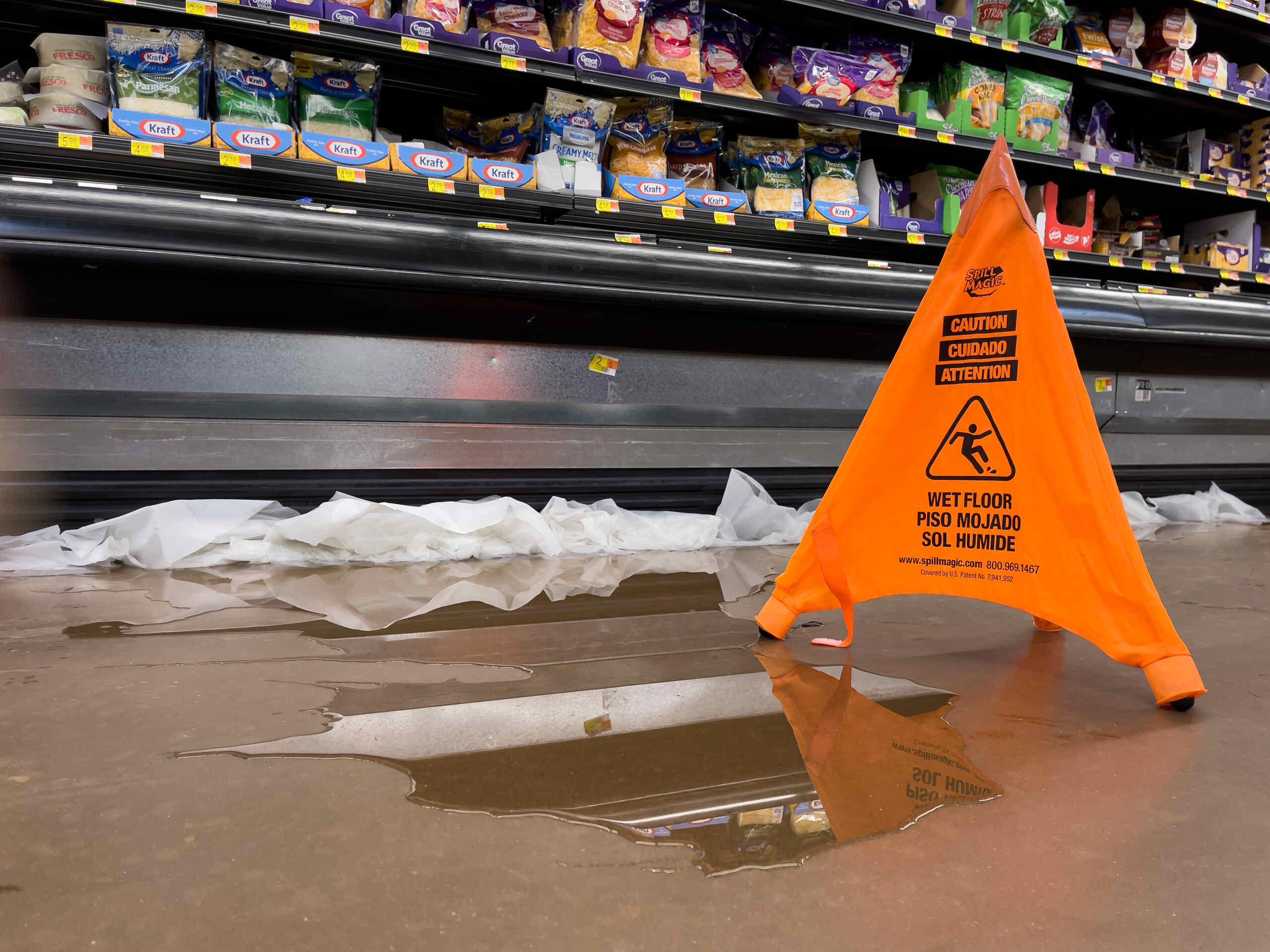
Year-round hazards include uneven flooring in older commercial buildings, torn carpeting in high-foot-traffic retail spaces, wet floors without adequate signage, poor lighting in stairwells and parking structures, and unmarked elevation changes at building entrances. Warehouse and distribution facilities near the Allentown-Bethlehem-Easton corridor represent a separate category with their own regulatory requirements under Pennsylvania’s premises liability framework.
Tenant and Visitor Falls in Allentown Apartment Buildings
Allentown’s rental housing stock includes a large number of older multi-unit buildings, particularly around Sixth Street, Seventh Street, and the West End. Broken stairwell lighting, cracked exterior steps, unsecured handrails, and uneven entryway flooring are among the most common hazards in these properties.
Landlords in Pennsylvania owe a duty of care to both tenants and their guests. If a visitor is hurt because of a condition the landlord knew about and ignored, a premises liability claim against the landlord is viable.
If your injury happened at a restaurant, a big-box retailer, a private business, a public facility, or an apartment complex anywhere in the Lehigh Valley, The Slocum Firm, P.C. can assess whether a viable claim exists.
How The Slocum Firm, P.C. Handles Allentown Slip And Fall Cases
The Slocum Firm, P.C., has been handling personal injury claims across Pennsylvania since 2009. With over 50 years of combined attorney experience, we have recovered millions for injured clients and maintain a recovery rate above 95 percent. Results may vary. Prior case outcomes do not guarantee similar results. Most cases reach resolution in less than a year.
From the first call, you speak directly with an attorney. The intake process does not go through layers of support staff. Your attorney reviews the facts, identifies the property owner and their insurance carrier, and begins evidence preservation immediately.
We build premises liability cases around four elements: the existence of a dangerous condition, the property owner’s knowledge of that condition, the owner’s failure to remedy it or warn about it, and a direct causal connection to your injuries.
Medical documentation is critical throughout this process. Your attorney will coordinate with your treating physicians to ensure the records support the full scope of your injuries, including any long-term limitations.
The Slocum Firm, P.C., operates on contingency. There are no upfront costs. No fees unless there is a recovery. Call or text (570) 209-7376 or toll-free at (888) 367-4577, any hour of the day or night.
Pennsylvania Slip And Fall Deadlines And Statutes You Need To Know
Pennsylvania’s statute of limitations for personal injury claims, including slip and fall cases, is two years from the date of injury under 42 Pa. C.S. Section 5524. Missing that deadline almost always ends your right to pursue compensation entirely. There is no exception for claims that feel straightforward.
Claims against government entities follow a separate and shorter process. Under Pennsylvania’s law governing claims against government entities, codified at 42 Pa. C.S. Section 8541, a notice of claim must be filed with the appropriate government agency within six months of the incident. If you fell on a sidewalk or in a public facility in Allentown, the timeline to act may be significantly shorter than two years.
The six-month notice rule for government properties comes up in pedestrian accident cases as well, particularly where poor road or sidewalk conditions contributed to the crash.
These deadlines apply regardless of whether negotiations with an insurer are ongoing. An Allentown slip and fall lawyer should be contacted as early as possible to protect your rights and preserve evidence before it disappears.

Allentown Slip and Fall Attorney Answers: Questions About Liability, Timelines, and Your Options
How do I know if the property owner is actually responsible for my fall in Allentown?
The owner is responsible if they knew about the hazard, or should have known through reasonable inspection, and failed to fix it or warn visitors. How long the hazard existed matters significantly; a spill unaddressed for hours is treated differently from one that appeared moments before the fall. Inspection logs and surveillance footage establish that timeline.
What if the property owner says I was partly at fault for the fall?
Pennsylvania’s shared fault rule allows recovery even if you share some responsibility, as long as your fault does not exceed 50 percent. If you are found 30 percent at fault, your recovery is reduced by 30 percent. Insurers regularly inflate the plaintiff’s fault percentage. That argument requires a factual rebuttal.
The property owner’s insurer offered me a quick settlement. Should I take it?
Not before you understand the full extent of your injuries. Quick settlement offers come early because the insurer wants to close the claim before you know what treatment will cost. Injuries from a fall can require months of treatment or surgery. Accepting a fast offer and signing a release means you cannot come back later. Have an attorney review it first.
Can I still file a claim if I did not seek medical attention immediately after the fall?
Yes, but delayed treatment complicates your case. Insurers use gaps in medical care to argue your injuries were not serious or were caused by something other than the fall. Seeking treatment as soon as possible after an injury and following your doctor’s recommendations consistently strengthens the connection between the accident and your damages.
What if the fall happened at an Allentown city facility or on a public sidewalk?
Claims against government entities in Pennsylvania follow a different process. Under Pennsylvania’s law governing claims against government entities, codified at 42 Pa. C.S. Section 8541, a notice of claim must be filed within six months of the incident. That is far shorter than the standard two-year deadline. Missing it can end your claim before it starts. Contact an attorney immediately.
Take The Next Step: Free Case Review From An Allentown Slip And Fall Lawyer
Property owners and their insurers count on one thing: that most people will not act fast enough to preserve the evidence that proves the hazard existed. Surveillance footage is gone in 72 hours. Maintenance logs get tidied up. The wet floor that had no sign became a hazard that was addressed within minutes, according to their records.
The Slocum Firm, P.C., sends evidence preservation letters the same day a case comes in. That is the difference between a claim supported by footage and one that relies on your word against theirs. Attorneys are available by call or text at (570) 209-7376 or toll-free (888) 367-4577 around the clock. Consultations are free. No fees unless there is a recovery.