In Pennsylvania, you may be able to recover compensation even if you are partially to blame for an accident, as long as your share of the fault does not exceed 50 percent. Under the Pennsylvania modified comparative negligence statutes, a determination of 51 percent or more fault will bar you from recovering anything.
Many people believe that if they contributed to an accident in any way, they lose their right to sue for damages. This misconception often prevents them from pursuing a valid shared-fault personal injury claim in Pennsylvania.
The reality is that the law allows for an apportionment of liability in a Pennsylvania accident, but the insurance company for the other party will work hard to shift as much blame as possible onto you.
An experienced Scranton personal injury attorney understands the nuances of Pennsylvania’s 51 percent rule and focuses on conducting a thorough assessment of accident liability.
Learn how the following legal insights may affect your case during a free consultation with The Slocum Firm.
Key Takeaways About Pennsylvania Modified Comparative Negligence
- The 51 percent bar: Pennsylvania’s modified comparative negligence rule, often called the 51 percent rule, completely bars you from financial recovery if a court finds you are 51% or more at fault for the accident.
- Reduced recovery: If you are found to be 50% or less at fault, your compensation is simply reduced by your percentage of responsibility. For example, if you are 30% at fault in a case valued at $100,000, you could still recover $70,000.
- Insurance company tactics: Insurers use comparative fault as a primary defense to reduce or deny claims. They will scrutinize your actions leading up to the incident to inflate your percentage of fault.
- The role of an attorney: A lawyer challenges the insurance company’s arguments by building a case that minimizes your assigned fault. They work to prove the other party’s negligence was the primary cause of the accident, keeping your liability below the critical 51 percent threshold.
How Does Pennsylvania’s Modified Comparative Negligence System Work?
After an accident, one of the first things an insurance company investigates is who was at fault. In many cases, the blame is not clear-cut.
Maybe one driver was speeding while the other made an improper turn. Perhaps a customer in a store was looking at their phone when they slipped on a wet floor that had no warning sign. This is where the concept of comparative fault comes into play.
Pennsylvania follows a “modified comparative negligence” system with a 51 percent bar. This rule has two key parts:
- Reduced damages: If you are found partially at fault, your total compensation will be reduced by your percentage of blame. If a jury determines you were 20% responsible for the accident, your final award will be cut by 20%.
- The 51% cliff: If you are found to be 51% or more responsible for the accident, you cannot recover any money at all. You fall off a legal “cliff” and are completely barred from recovery.
This system is different from a “pure” comparative negligence state, where you could recover damages even if you were 99% at fault. It also differs from a strict “contributory negligence” state, where being even 1% at fault would prevent you from recovering anything. Pennsylvania’s rule strikes a balance, but that 51% threshold is a critical battleground in many personal injury claims.
The Insurance Company’s Goal: Pushing the Blame to You
Insurance adjusters are well-versed in comparative fault. Their job is to minimize the amount their company has to pay out. One of the most effective ways to do this is to argue that the injured person shares significant blame. Every percentage point of fault they can assign to you directly reduces their financial liability.
They might try to do this by:
- Misinterpreting your statements: Taking an innocent apology like “I’m so sorry” as an admission of guilt.
- Scrutinizing your actions: Questioning why you didn’t swerve sooner or why you were in a particular area of a store.
- Using traffic citations against you: Arguing that a minor traffic ticket you received proves you were mostly at fault.
- Delaying the investigation: Waiting for evidence that could prove their driver’s fault to disappear.
An attorney anticipates these tactics. They advise clients on how to communicate with insurance companies and conduct independent investigations to gather evidence that tells the whole story, not just the insurer’s version.
Establishing the Percentage of Fault in a PA Accident
The percentage negligence calculation in Pennsylvania is not a mathematical science. It is a subjective assessment made by an insurance adjuster during settlement negotiations or by a jury at trial. They will review the evidence presented and decide how to allocate 100% of the blame between the parties.
The burden of proof for comparative negligence is on the defendant. This means the other party’s insurance company must present evidence to prove you were negligent and that your negligence contributed to the accident.
Factors that influence the apportionment of liability include:
- Police reports: While not always the final word, the officer’s narrative and conclusions carry weight.
- Witness testimony: Independent witnesses who saw the accident can provide a neutral perspective.
- Physical evidence: Photos of the accident scene, vehicle damage, and property defects all help reconstruct the event.
- Expert opinions: Accident reconstructionists can analyze data to determine vehicle speeds, impact angles, and other crucial details.
A legal team works to build a strong narrative that minimizes your assigned percentage of fault. This involves highlighting the other party’s reckless actions while showing that your own conduct was reasonable under the circumstances.
Scenarios Where Insurance Companies May Try to Push You Over 50 Percent
Insurance companies often look for ways to assign a higher percentage of fault to the injured party, especially in cases where shared fault is involved. Here are some common scenarios where they may attempt to argue that you bear the majority of the blame:
- Car accidents: In a left-turn collision, the driver turning left is typically at fault for failing to yield the right of way. However, if the other driver was speeding or distracted, the insurance company may argue that their actions contributed significantly to the crash, potentially inflating their share of the blame to exceed 50%.
- Slip and fall accidents: Property owners are responsible for maintaining safe premises, but insurers may claim that you were not paying attention to where you were walking. They might argue that your inattention, rather than the property owner’s negligence, was the primary cause of the fall.
- Pedestrian accidents: While drivers are often presumed at fault, insurers may argue that the pedestrian was jaywalking, crossing outside a designated area, or darting into traffic, shifting the blame onto the pedestrian.
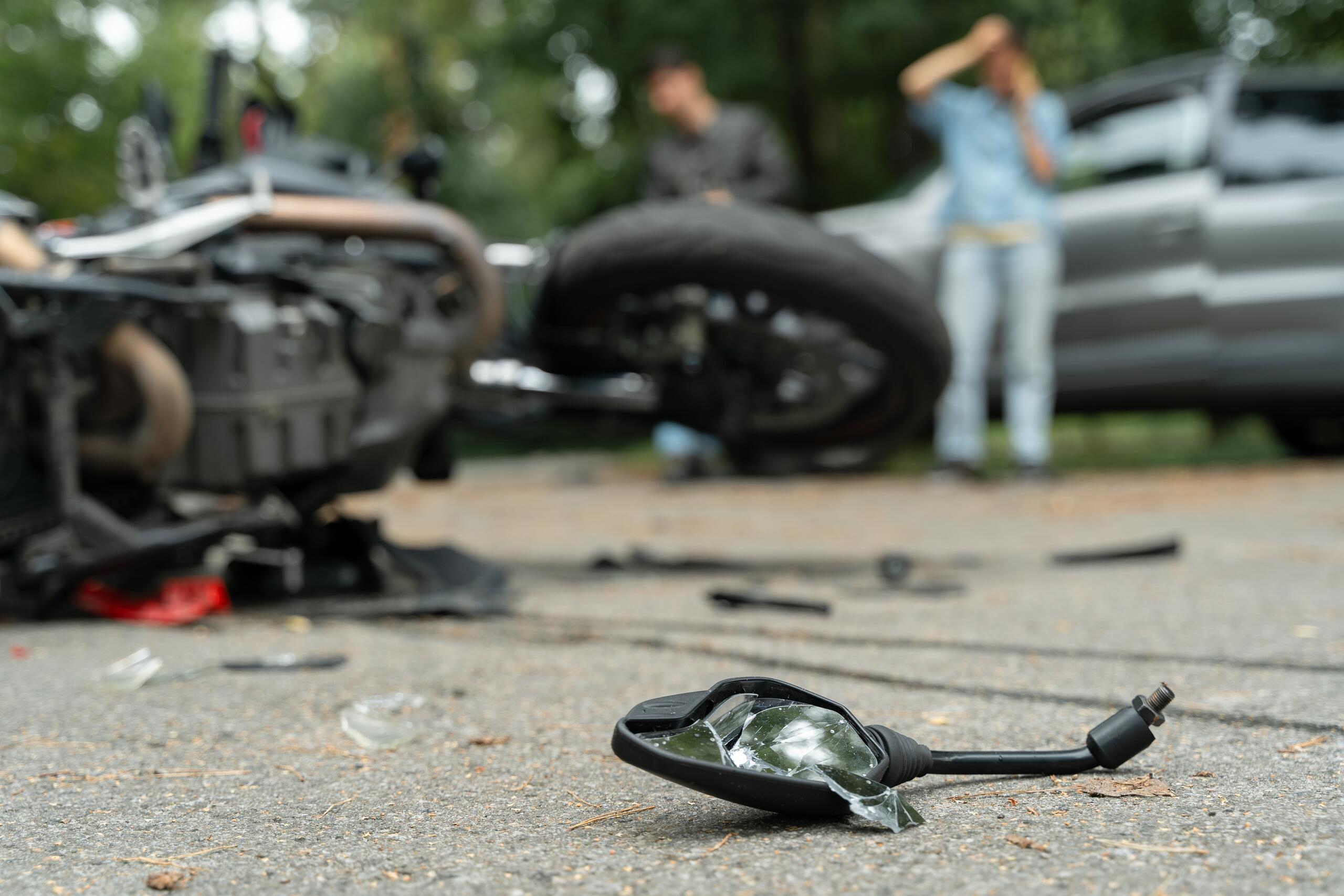
- Motorcycle accidents: Insurers may argue that the motorcyclist was riding recklessly or weaving through traffic, even when the primary cause of the crash was another driver’s failure to yield or check blind spots.
- Bike accidents: Insurance companies might claim that the cyclist was not following traffic laws, such as riding outside a bike lane or failing to signal, to shift blame away from a distracted or speeding driver.
In each of these situations, the insurance company’s goal is to reduce or eliminate its liability by assigning you a higher percentage of fault. Keeping your share of the blame below the critical 51% threshold is essential to preserving your right to recover compensation.
FAQs About Sharing Fault in a Pennsylvania Injury Claim
What if I admit fault at the accident scene?
Saying “I’m sorry” or admitting some fault at the scene can hurt your case, as the insurance company will use it against you. However, it does not automatically bar you from recovery. An attorney can help put your statement into context and argue that the other party still bears the majority of the responsibility for causing the accident.
How is the percentage of fault determined if there are no witnesses?
When there are no independent witnesses, fault is determined primarily from physical evidence and the parties’ testimony. This is where an accident liability investigation becomes critical. A lawyer may hire an accident reconstructionist to analyze vehicle damage, debris fields, and other evidence to form a scientific opinion about how the crash occurred.
What if there are multiple at-fault parties?
In accidents with multiple defendants, a jury will assign a percentage of fault to every party involved, including you. Pennsylvania law allows for “joint and several liability,” which means that under certain circumstances, you may be able to collect your full damages from one defendant, even if they were only partially at fault.
Does comparative negligence apply to my own insurance policy?
Comparative negligence rules primarily apply to claims against another party (a “third-party claim”). If you are making a claim under your own policy, such as for Uninsured or Underinsured Motorist (UM/UIM) benefits, the rules may differ. However, your insurance company essentially steps into the shoes of the at-fault driver and may still try to argue you were partially at fault to reduce the amount they have to pay.
What happens if I am found less than 50 percent at fault?
You can still recover compensation, but your award will be reduced by your percentage of fault. For example, being 30% at fault in a $100,000 case means you could recover $70,000. A lawyer can challenge inflated fault claims and advocate for the maximum compensation you’re entitled to under the law.
Does comparative fault apply to wrongful death claims in Pennsylvania?
Comparative fault applies to wrongful death claims. If the deceased is found partially at fault, the compensation awarded to their family may be reduced by their percentage of fault. A lawyer can help ensure the focus remains on the other party’s negligence.
Who pays for my injuries in an accident with shared fault?
If fault is shared, the other party’s insurance typically pays for your damages, reduced by your percentage of fault. For example, if you are 20% at fault, their insurer would cover 80% of your damages. An attorney can advocate for a fair allocation of fault to maximize your recovery.
Don’t Let an Accusation of Fault Stop You From Recovering the Maximum Compensation You May Be Eligible For Under Pennsylvania Personal Injury Law
After an accident, it is easy to second-guess your actions. The other driver’s insurance company will capitalize on this uncertainty, working to convince you that the accident was mostly your fault. Do not let them be the final judge and jury of your claim.
Pennsylvania law is clear: sharing some blame does not prevent you from recovering compensation. As long as the other party was more at fault than you were, you may have a path to a financial recovery. An attorney’s role is to protect that path.
At The Slocum Firm, P.C., we have extensive experience fighting back against insurance company tactics. We understand what is at stake with the 51% rule and work to keep our clients on the right side of that line.
Are you being told you cannot recover compensation because you were partially to blame for your accident? Contact The Slocum Firm today for a free, no-obligation consultation to discuss your legal rights. We are available 24/7, and you will not pay a fee unless we recover funds for you.
Scranton Personal Injury Claim Legal Resources
Our attorneys have curated these resources to offer insights relevant to those navigating the complexities of personal injury claims in Pennsylvania. For personalized legal guidance, contact our firm directly to schedule a free case evaluation with our personal injury attorneys in Scranton.